Restaurant Software Integrations: Payments, Reservations, Online Ordering and Accounting
A practical guide to restaurant integrations across payments, reservations, online ordering, accounting and inventory, with data ownership, security and error-control guidance.
- Bahram Davoodi
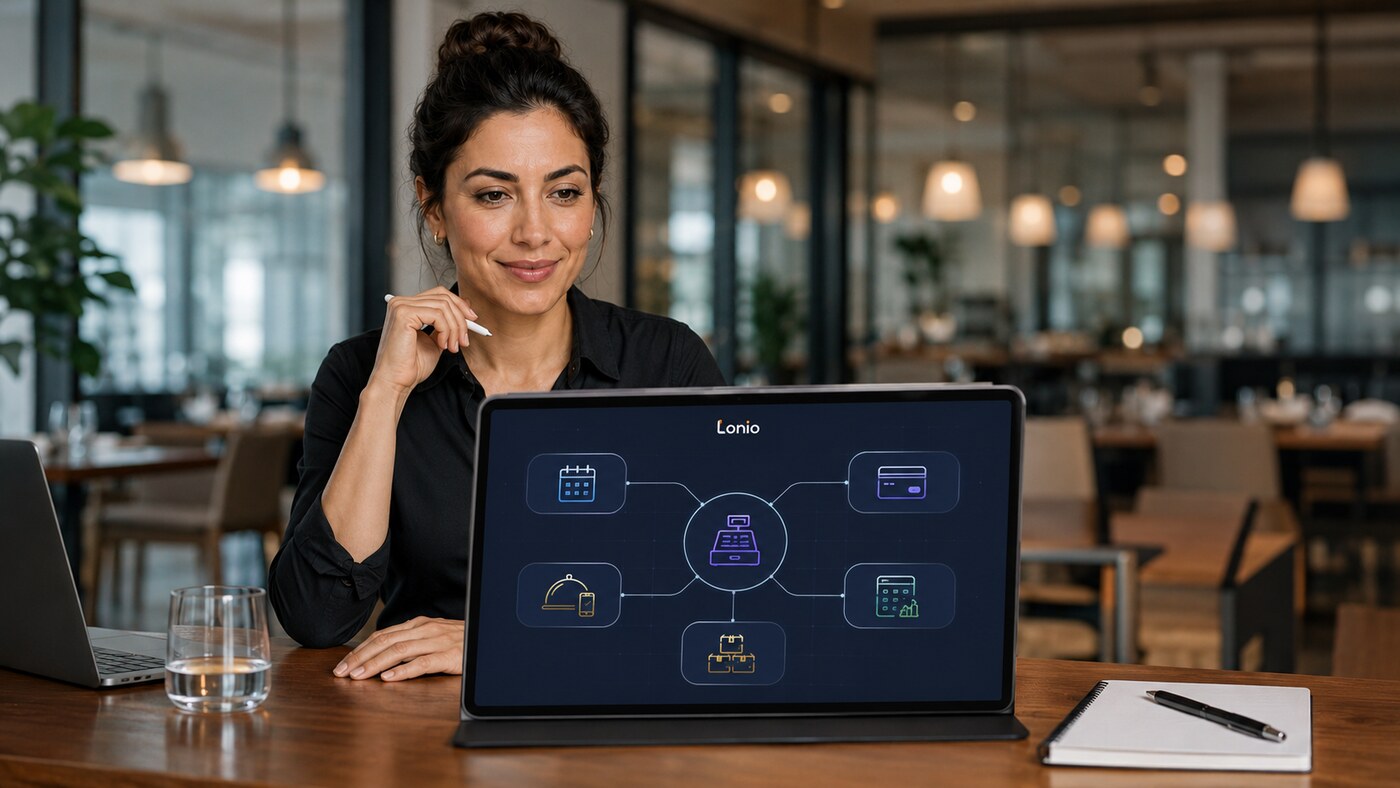
An integration is valuable when it removes duplicate data entry and makes each system responsibility clear. A connector name is not enough. Confirm which data moves, in which direction, how quickly and what happens when transfer fails.
Payments
The POS can send the amount to the payment terminal and receive the transaction result back. This reduces manual amount errors. Supported terminals, providers, refunds and offline behaviour must be confirmed for the live setup.
Reservations and table plan
Reservations can be linked to the guest, table, deposit and order. Define which system owns availability, guest details and reservation status so that two systems do not overwrite each other.
Online ordering
Online orders should arrive with payment status, fulfilment time and structured product options, then route to the correct kitchen or bar station. A unique external order ID helps prevent duplicate preparation when a request is retried.
Accounting
Sales, tax categories, payment methods, refunds and records should be prepared in a usable accounting format. A controlled daily or periodic export may be more appropriate than real time when records need review before posting.
Inventory and purchasing
Sales and goods receipts can update stock, while low stock signals can support purchasing. Decide where recipes, stock quantities, suppliers and purchase orders are maintained.
Criteria for a real integration
- Exact data scope
- Transfer direction
- Synchronisation speed
- Error and retry handling
- Audit history and reconciliation
- Support owner on each side
Data ownership
Identify the system of record for every important object. The restaurant platform may own catalogue and prices, the payment provider owns the transaction result, and final records go to accounting. Two owners for one field can create conflicts and unintended overwrites.
Real time or scheduled?
Payment results and paid online orders usually need a fast response because they affect live service. Accounting exports and selected inventory records may run on a controlled schedule. Timing should match operational risk.
Error handling and reconciliation
A production connection must expose duplicate orders, uncertain payments, lost connections, incomplete data and failed delivery. Each exception needs a status, timestamp, retry history and owner.
- Use a unique ID to prevent duplicates.
- Keep an error queue for untransferred transactions.
- Reconcile POS amounts with payment records.
- Retry without creating a second order or payment.
- Record changes and manual intervention.
Security and access
Give each connector only the access it needs. Protect API keys and service accounts, assign credential ownership and preserve audit history when replacing a connection.
Evaluation checklist
- Request the inbound and outbound field list.
- Confirm direction and system of record.
- Test network and service failure.
- Check duplicate prevention.
- Identify support and escalation owners.
- Document setup, maintenance and change costs.
- Review export and termination procedures.
Practical scenario
A paid online order reaches the POS and its unique ID prevents a duplicate. If the payment response is uncertain, the order remains marked for review instead of being automatically prepared or refunded. When the connection returns, the transaction is reconciled with the payment source.
How Lonio can help
Review confirmed connections on Lonio integrations and the wider workflow on the restaurant and cafe solution. Provider, version, fields, costs and support responsibility must be confirmed before purchase.
Conclusion
Good integrations remove rework, keep data ownership clear and make errors traceable. Reliable identifiers, reconciliation, access control and support ownership matter more than a marketplace logo.
Frequently asked questions
Which restaurant software integrations matter most?
Payments, reservations, online ordering and accounting often create the most duplicate entry and reconciliation risk; inventory may also be critical.
How should a real integration be evaluated?
Confirm the data fields, transfer direction, system of record, timing, error handling, security and support owner.
What should happen when a connection fails?
The transaction should remain traceable, retries must not create duplicates, and a named owner should reconcile it.