Lieferando and foodora: how restaurants can control their sales-channel costs
An own ordering channel can reduce dependence. The useful comparison includes all costs, reliable operations and actual completed orders.
- Bahram Davoodi
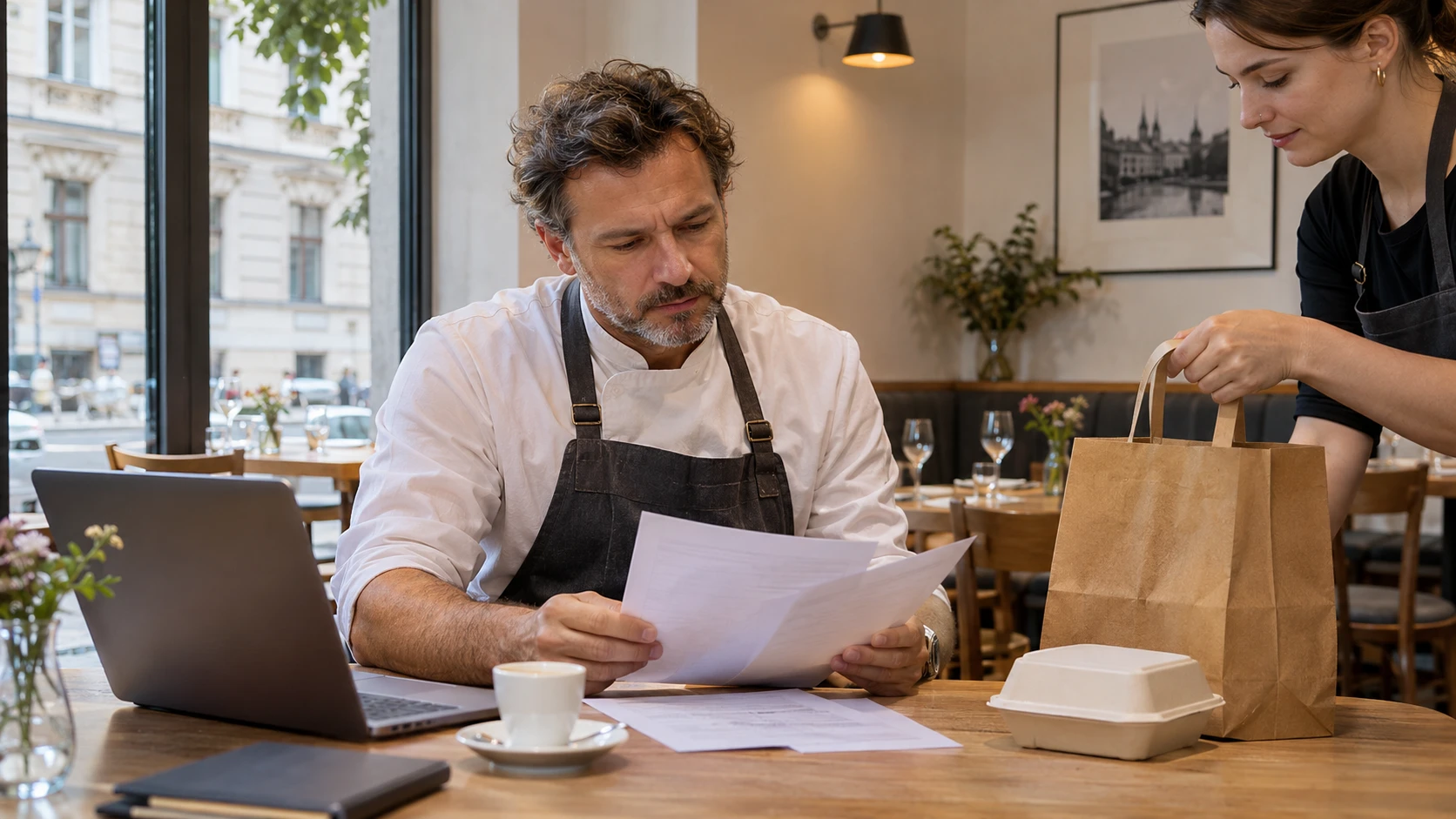
A busy order screen does not necessarily mean a healthy return. For restaurants in Austria, the useful question is what remains after food production, packaging, delivery, fees and advertising. Start with your own statements, rather than a blanket judgement about Lieferando or foodora.
1. What the BWB findings actually say
The BWB published its sector inquiry on 31 August 2026. Vienna respondents generated an average 25–30% of total revenue through platforms in 2023. This is neither a commission rate nor a current Austria-wide average. The announced abuse investigation concerns a suspicion, not an established infringement. See the original report for the evidence base.
These findings do not automatically mean your restaurant should leave a platform. A marketplace may bring orders that would otherwise never occur. Dependence on one channel can nevertheless make planning difficult. Assess reach, contribution and operational workload separately.
2. Separate commission from advertising
A universal answer to “What does Lieferando cost in Austria?” might misrepresent your agreement. Place the actual statement beside the agreed terms. For every channel, record:
- the commission base: which amounts, discounts and taxes enter the calculation;
- payment, delivery, connection and recurring software fees where they genuinely apply;
- the restaurant’s share of promotions and vouchers;
- paid placement or advertising, refunds and cancellations.
Avoid counting the same cost twice. If commission already includes a service, do not add it again as a separate fee. A payout is not profit either: it may already contain deductions while ingredients and staff still need paying. Use the same documented net or gross basis for every amount and handle VAT consistently.
3. Add a focused direct-ordering channel
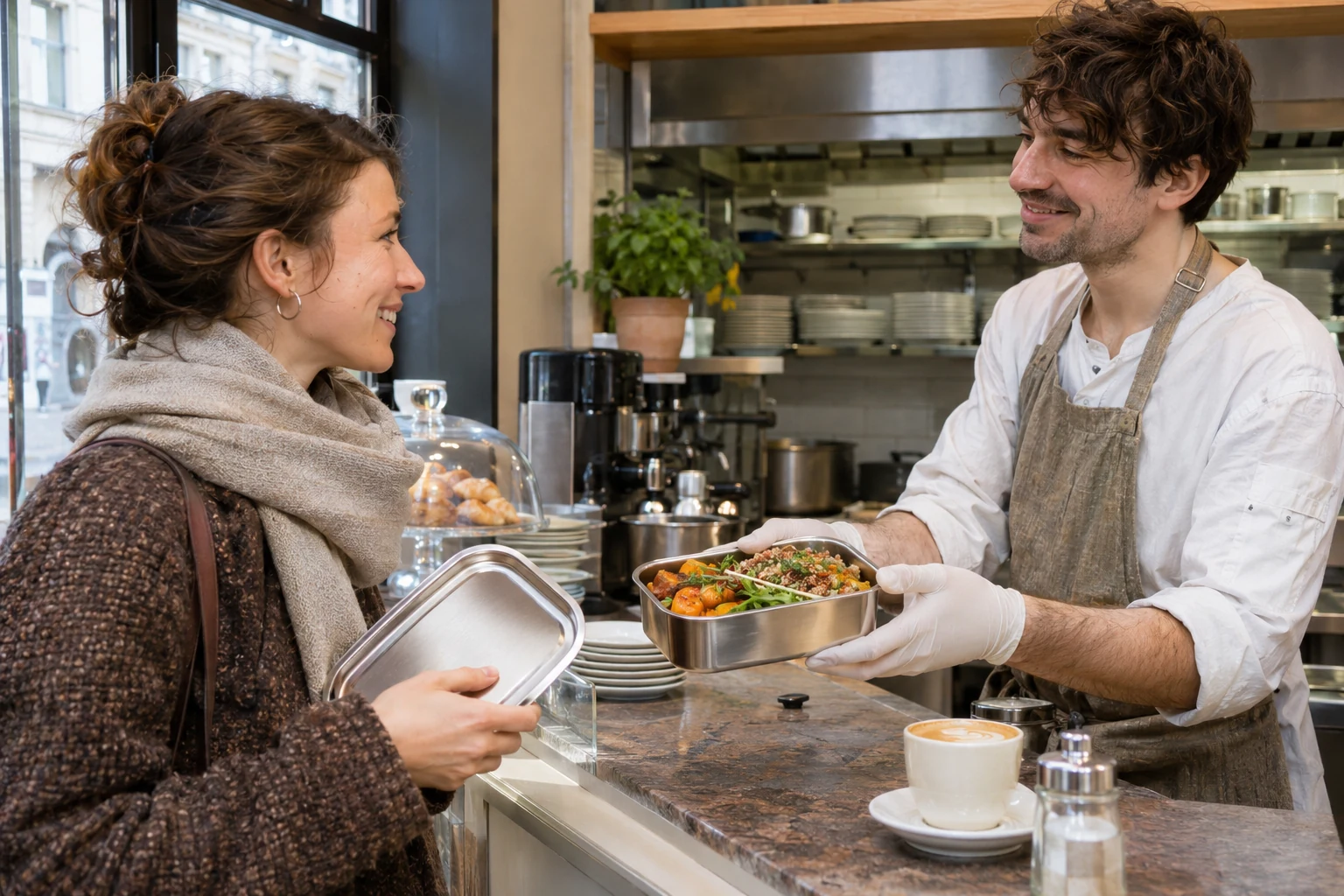
Direct ordering makes particular sense when guests already know the restaurant and want an easy way to order again. Begin with a clear offer: perhaps a small collection menu, realistic collection times and a reachable person when something goes wrong. Up-to-date availability matters more than the largest possible menu.
Make the channel visible at your own permitted touchpoints: your website, premises and own menu. Check existing contracts before using platform materials or order contacts for other purposes. A new online shop does not create demand by itself. Maintenance, visibility, payment and customer service remain business responsibilities.
4. Compare equivalent orders
Compare the same dishes, baskets, times and fulfilment methods. A direct collection order is not a fair cost comparison with a platform-delivered order if the delivery service is ignored.
Cost or service | Marketplace | Own direct ordering |
|---|---|---|
Customer acquisition | Referral and potentially additional advertising | Include own visibility and customer support |
Payment | Check the actual contract | Include payment processing and refunds |
Delivery | Clarify included and additional services | Include own delivery effort or a contractor |
Technology | Check interfaces and recurring charges | Include setup, hosting, maintenance and integration |
A practical comparison is the contribution towards fixed costs: net revenue minus ingredients, packaging, variable production and delivery, channel-specific charges and attributable advertising. Then deduct recurring channel-specific fixed costs across the entire comparison period. A positive contribution is not yet business profit; rent and other general fixed costs still have to be covered.
Also record complaints, incorrectly entered options and manual rework. A channel that looks cheaper on the invoice can require more staff time in practice.
5. Plan customer data and operations together
An order is not automatic marketing consent. Before reusing data, check the agreement, legal basis and permitted purpose. The European Commission explains marketing with contact data from another organisation and purpose, access and retention principles. Keep transactional messages and marketing operationally separate.
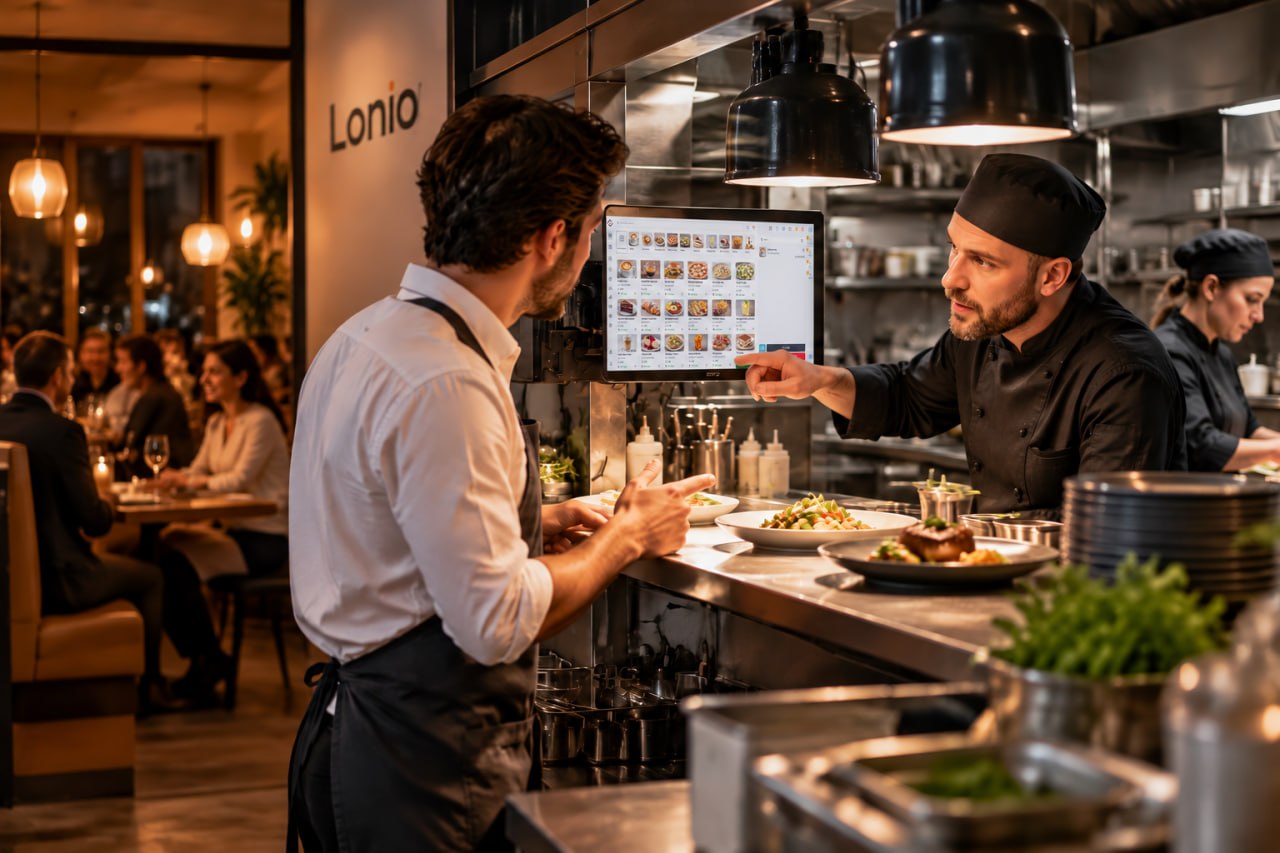
Operationally, every order needs an identifiable path through intake, POS, kitchen, payment and refund. Treat Lonio as an integrated system for the whole business: the cash register, inventory, website and other business processes belong in the same plan. Confirm the features and connections required for your particular setup against the current plan and quotation. This article does not claim that a particular platform connection or cost saving has been tested. The existing online-ordering, POS and kitchen guide covers the workflow.
6. Decide from a bounded comparison
Choose a defined period containing comparable weekdays. Record completed paid orders, refunds, costs and additional work for each channel. Mark unknown values as unknown. Clicks are not orders, and more orders do not prove a better return.
Then decide which combination the restaurant can actually sustain. Keep economically worthwhile platform orders, address demonstrated weaknesses and expand your own channel where demand and operations support it. For a discussion with Lonio, current statements, the menu and the intended ordering workflow are more useful than an unsupported savings promise.