Takeaway in customers’ own containers: prepare for February 2027
A customer orders two lunches: one in their own container and one in your packaging. The kitchen must distinguish them, the price must be correct, and stock records should reflect only the packaging actually used. These small handovers determine whether a new requirement works during a busy service.
- Bahram Davoodi
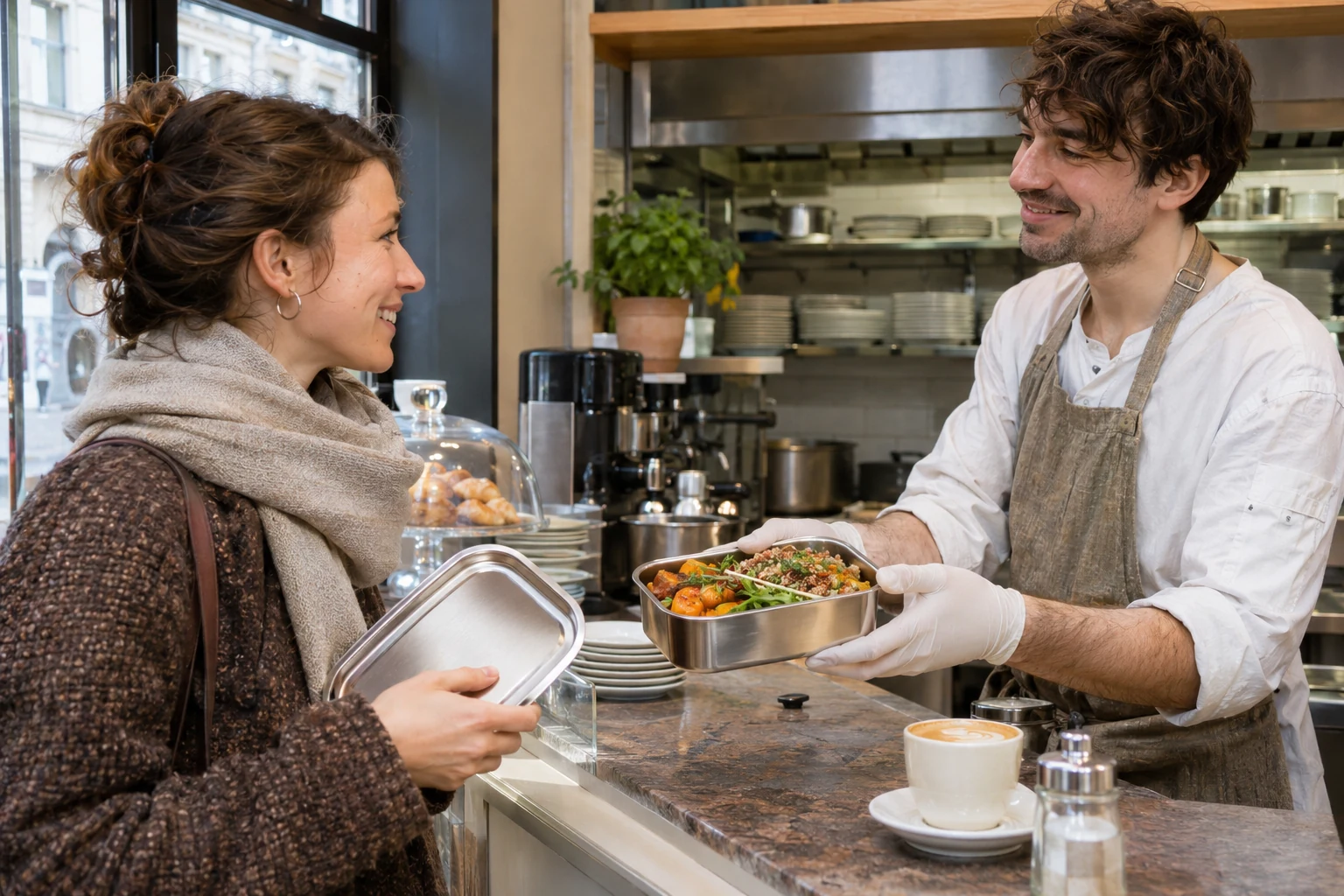
A customer orders two lunches: one in their own container and one in your packaging. The kitchen must distinguish them, the price must be correct, and stock records should reflect only the packaging actually used. These small handovers determine whether a new requirement works during a busy service.
Which deadline covers which requirement?
By 12 February 2027, the hospitality businesses covered by Article 32 must provide a way to fill customer containers with ready-prepared takeaway food and hot or cold drinks. The same product must not cost more or be offered on less favourable terms. Customers must be informed through visible, legible notices at the point of sale. The basis is the EU Packaging and Packaging Waste Regulation.
Offering a business-operated reusable packaging system is a separate stage: Article 33 specifies 12 February 2028 and has its own exemptions. A customer container, a deposit package and a reusable vessel supplied by the business are not interchangeable concepts. The Austrian ministry also explains the phased application.
Agree the process before lunchtime
Start with the products and ordering channels you actually offer. Soup ordered at the counter, a telephone order and a prepaid website order may have different handover points. Decide when the container must arrive and who checks suitability. For food packed before collection, the question cannot be left until payment.
Choose an appropriate receiving area and explain the hygiene requirements. The WKO guidance covers information about suitable containers and hygiene; unsuitable or unhygienic containers may be refused. Train staff against those criteria so decisions are consistent.
Five checks from order to collection
Stage | What staff check |
|---|---|
Order | Which portion goes into which container? |
Receipt | Is the vessel suitable for the intended food? |
Price | Is there no surcharge for the customer container? |
Kitchen | Is the instruction visible against the right dish? |
Handover | Do the contents, container and packaging match? |
Use a clear order option where your configuration supports it. A note visible only on an office computer will not help the kitchen. Follow the information through to the actual kitchen screen or printed ticket rather than assuming that saving a note completes the job.
A small rehearsal reveals the gaps
Create a test order with two identical dishes in different containers. Check that any automatic packaging charge is removed for the customer box without accidentally discounting the food. Cancel one portion and recheck the price, kitchen instruction and packaging quantity. Use an appropriate test environment, not fictitious sales in live trading records.
This is a proposed process, not evidence of a previously tested Lonio setup. Use the product catalogue to plan the necessary products and options, then verify the connection with inventory management in your actual configuration.
Before introducing the process
- Confirm the rules applicable to your business.
- Make container criteria and customer notices understandable.
- Train staff on acceptance, refusal and escalation.
- Test ordering, pricing and kitchen handover together.
- Assign an owner to resolve and record outstanding problems.
Does every business need a deposit scheme in 2027? The customer-container requirement must be distinguished from the separate reusable-packaging offer. Check the relevant provision and its exemptions.
Is a sign at the entrance enough? Visible information is one part. Staff must also be able to deliver the advertised process during service.