Alcohol duty in 2027: from purchase price to a coordinated drinks menu
Prepare for Austria’s alcohol duty change on 1 January 2027: confirm supplier prices, calculate portion costs and coordinate stock, menu, POS and website updates.
- Bahram Davoodi
When the purchase price of a spirit changes, several sales items may be affected: individual measures, cocktails, extra measures and offers. An organised process therefore connects the supplier's information with portion costs, stock and approved selling prices. Only then are the menu, POS system and website updated.
From 1 January 2027, Austria's standard alcohol duty rate rises from €1,200 to €1,560 per 100 litres of pure alcohol. This is a 30 per cent increase in this excise duty, not an increase in VAT rates or a requirement to raise drinks prices by 30 per cent. The relevant sources are section 2 of the Alcohol Duty Act 2022 and the information from the Austrian Ministry of Finance.
1. Identify affected items and recipes
The increase applies to goods covered by the Alcohol Duty Act, such as schnapps and liqueurs. It must not be applied indiscriminately to everything labelled “alcoholic beverages”. Legal classification depends on factors including the type of product and its alcohol content; section 1 of the Alcohol Duty Act 2022 defines the scope.
Start with the affected purchasing items and link them to every relevant sales item. If the same gin is sold neat, in a gin and tonic and in a cocktail, all three cost calculations need checking. Record different serving quantities too. Use existing item identifiers so that the price change does not create duplicate products.
2. Use confirmed supplier prices as the basis
Request a clear price list or quotation. For each item, record the pack size, alcohol content, previous and new purchase prices, and when the new terms take effect. Clarify whether that date applies to ordering or delivery and which discounts, freight charges or surcharges are included.
Compare prices on the same basis: the same pack size, quantity tier and treatment of VAT. If alcohol duty is already included in the supplier's price, do not add it again. A calculation of the duty alone therefore cannot replace a confirmed purchasing price list.
3. Relate the change to the portion sold
For drinks costing, the relevant figure is the ingredient cost per portion. Divide the confirmed bottle price by the theoretical number of portions and account for documented serving losses separately. For cocktails, add the costs of the other ingredients. If the portion size or recipe changes at the same time, record those changes separately.
Hypothetical calculation — alcohol duty only: a 0.7-litre bottle at 40 per cent alcohol by volume contains 0.28 litres of pure alcohol. This assumes the standard duty rate, with no reduction or exemption.
Calculation | Amount |
|---|---|
Previous rate per litre of pure alcohol | €12.00 |
New rate per litre of pure alcohol | €15.60 |
Difference for the bottle: 0.28 × €3.60 | €1.008 |
Difference for 4 cl of this spirit: 0.04 × 0.40 × €3.60 | €0.0576 |
The difference is therefore approximately €1.01 per bottle or 5.76 cents per 4-cl portion, before VAT and other pricing factors. This example describes neither an actual supplier price nor a recommended selling price. If the calculation already uses the new purchase price, this difference must not be added again.
4. Keep existing stock and new receipts traceable
For goods on which the alcohol duty liability arose before 1 January 2027, the previous rate continues to apply. This is set out in section 95(4) of the Alcohol Duty Act 2022. Bottles already taxed accordingly are not taxed again at the higher rate simply because the year changes. The delivery date alone does not determine when the duty liability arose.
Document existing quantities and incoming stock together with the corresponding purchasing documents. Do not retrospectively overwrite earlier purchase prices. Agree the stock valuation with your accounting team. Businesses that import or produce goods themselves, or store them under duty suspension, must also clarify their own excise obligations; the process for purchased, duty-paid drinks is not sufficient for those cases.
5. Approve selling prices and the start date
Decide which prices to adjust using the complete costing. For each sales item, document the previous price, approved new price, portion size, responsible person and effective date. Keeping a selling price unchanged is also a deliberate decision and should remain identifiable.
Check extra measures, meal deals and time-limited promotions too. Decide when printed menus will be replaced and digital information updated. Also determine how orders already accepted will be handled, so that no unresolved price differences arise during the changeover.
6. Check the menu, cash register and online presence together
Compare the approved information everywhere you actually use it: printed menus, QR menus, the POS system, website and, where applicable, online shop. Check portion sizes, product names and options as well as prices. Review each affected location if its range or prices differ.
Before approval, run through a few typical orders in a suitable test environment or preview: a single measure, a cocktail and an offer. Do the displayed price, order item and receipt preview agree? Record who checked them and which version was approved.
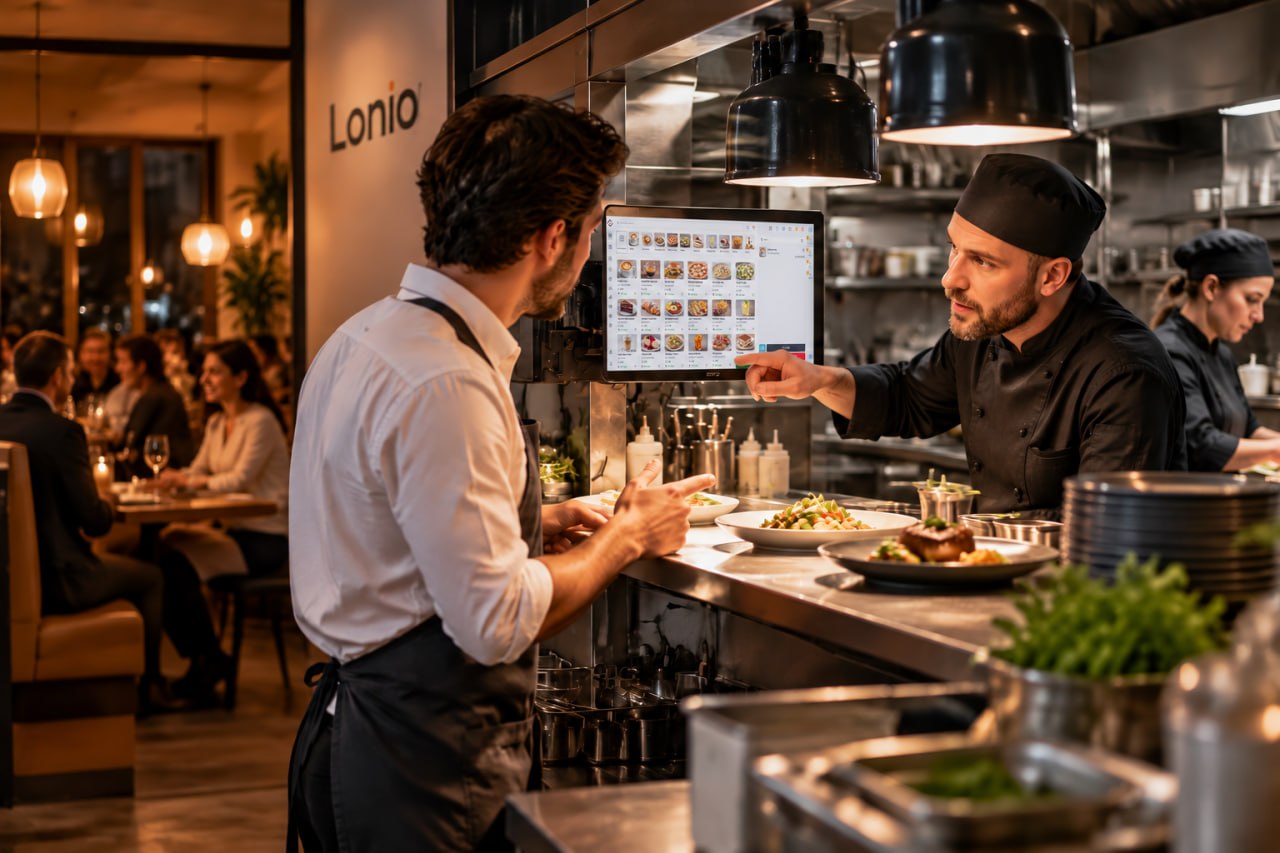
When implementing the change with Lonio, consider purchasing, catalogue, stock and sales together. Establish which information is maintained centrally in your specific setup and which publishing destinations need separate updates. This process does not assume that every channel updates automatically.
Legal position checked on 25 November 2026. This guidance does not replace a review of special tax cases. Austria's alcohol duty territory excludes Jungholz and Mittelberg (section 1(2) of the Alcohol Duty Act 2022).