Restaurant Takeaway Orders: Ready Times, Packaging and Courier Handover
Operational guide to restaurant takeaway and delivery orders, including promised times, kitchen production, packaging, final quality control, courier handover and refunds.
- Bahram Davoodi
Takeaway orders need a different operating flow from table service. Customer details, promised collection or delivery time, payment, kitchen production, packaging and handover must stay connected to the same order.
Capture the essential order data
- Customer name and contact number
- Collection or delivery time
- Delivery address where relevant
- Payment status and outstanding balance
- Packaging and handover notes
- Items, modifiers and substitutions
Bring every channel into one order structure
Counter, telephone and online orders should enter a shared workflow so staff do not retype orders or create duplicates. The source channel should remain visible for reporting and support.
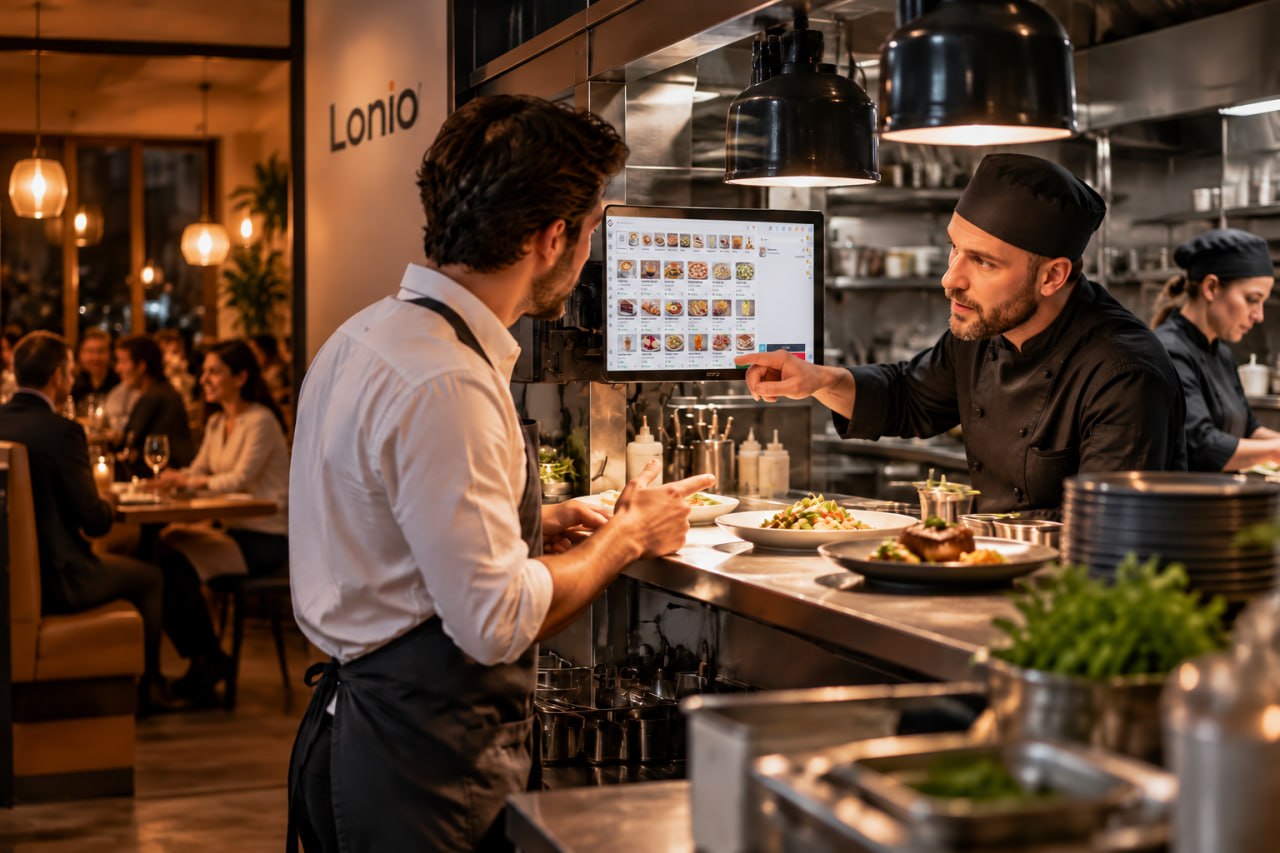
Route items to the correct production station
Food and drinks should follow the same verified kitchen-routing rules as dine-in orders, while the takeaway label and promised time remain prominent. Changes or cancellations must update the existing order without resending unaffected items.
Set a realistic promised time
The promised collection or delivery time should reflect item complexity, the live kitchen queue, packaging capacity and orders already committed. The customer, POS, kitchen and handover point should work from one time, with every change recorded.
- Received
- In preparation
- Packaging
- Ready for collection or dispatch
- Handed over
- Needs follow-up
Compare promised and actual times by hour, channel and product group. Automated estimates or notifications should only be claimed when they are confirmed in the live product configuration.
Make packaging a separate operating stage
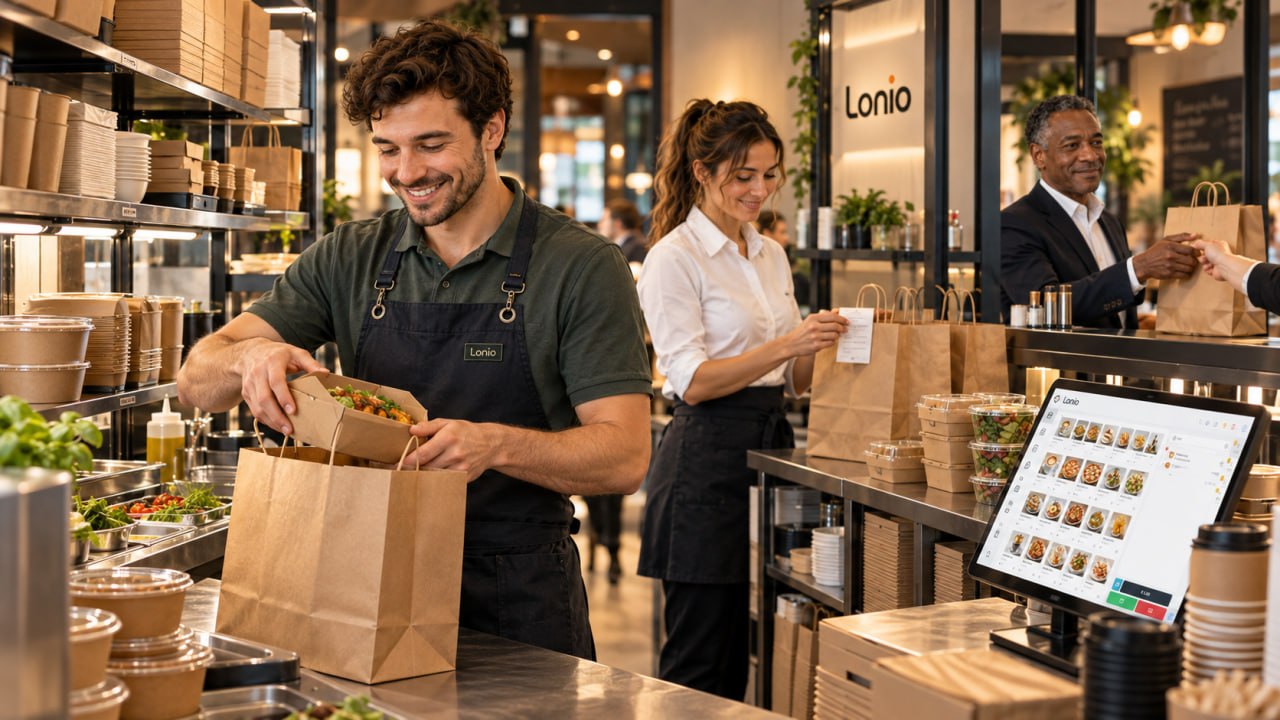
Cooking complete does not mean the order is ready. A packaging station should check completeness, modifiers, sides, drinks, sauces, utensils and the order number before the order moves to ready status.
Run a final quality check before release
A named person should match the digital order with the physical packages. Check the recipient identifier, package count, contents, substitutions approved by the customer, payment status and delivery method. Responsibility should remain clear during peak periods.
Use suitable packaging and separate items where needed
Containers, lids, labels and bags should match the product and internal food-safety procedure. Hot and cold items, food and drinks, or multi-part orders may need separation. Record the number of packages so a customer or courier does not leave with only part of the order.
Handover to the correct courier or customer
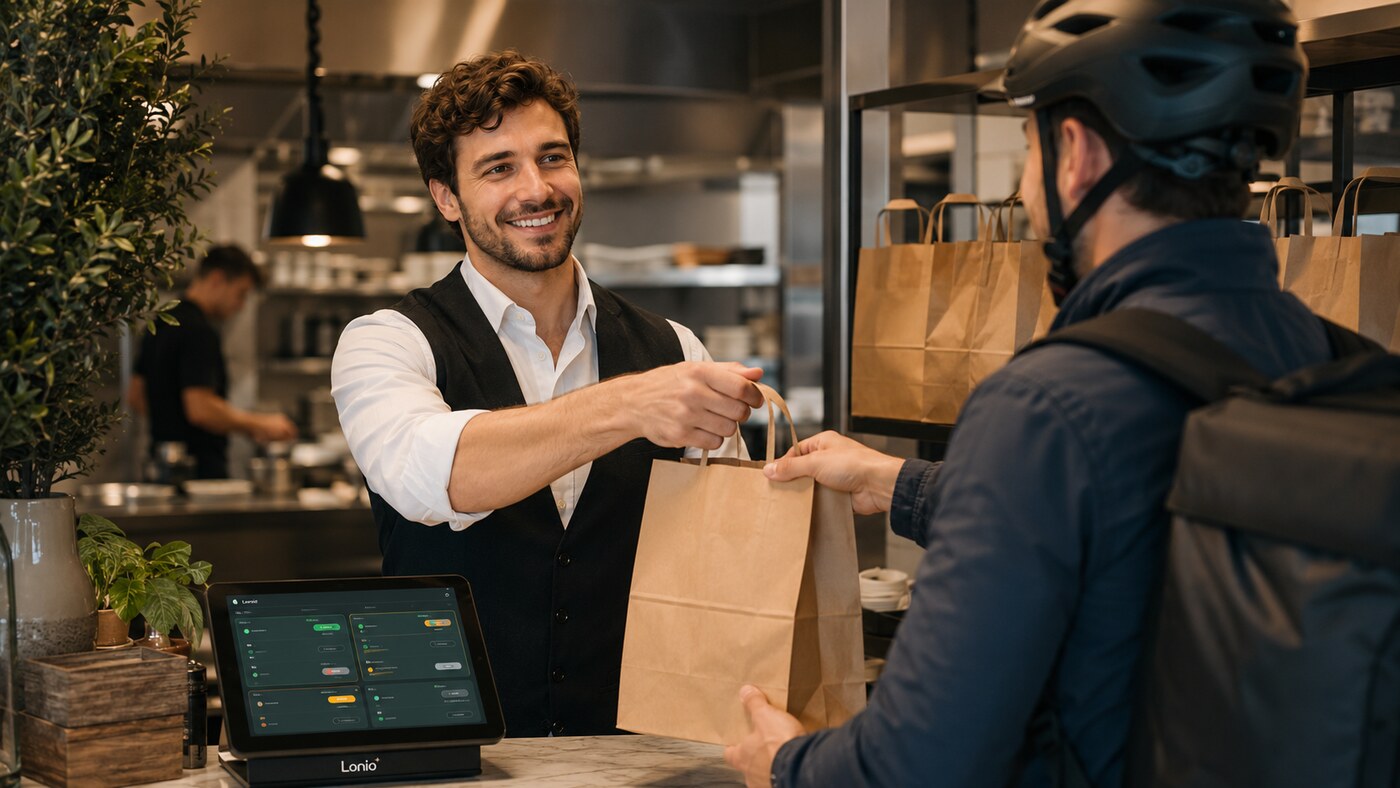
Before release, match the order number and recipient. For a courier handover, confirm destination, package count, promised time, payment state and, where supported, courier identifier and departure time. Recording handover does not imply live courier tracking.
Short handover checklist
- Confirm order number and recipient.
- Count packages and ancillary items.
- Check payment and outstanding balance.
- Record departure time and responsible employee.
- Keep any dispute or failed handover linked to the same order.
Handle ready but uncollected orders
If a customer does not arrive, record the actual ready time, contact attempts and the shift manager's decision. Holding time, storage location, late handover, remaking or waste recording must follow the restaurant's own safety and quality procedure.
Support staged fulfilment without losing traceability
Large orders may be handed over in parts. The history should show which items and packages left, when they left and who released them. Delivered and outstanding items must remain separate.
Coordinate cancellation and refund
A paid order may require a refund before cancellation is complete. Cancellation must also reach the kitchen and packaging stage quickly enough to stop unnecessary production. Payment method, approval and accounting treatment depend on the confirmed setup.
Turn quality errors into corrective action
When the final check finds a missing item, wrong modifier or packaging problem, record the error type, where it originated and the corrective action. Repeated patterns should trigger menu, routing, training or workstation improvements.
Measure the process
- Order received to ready time
- Delay against promised time
- Incomplete or incorrect orders
- Cancellations and refunds
- Uncollected orders
- Sales and errors by channel
How Lonio can help
Depending on the confirmed configuration, Lonio can keep order details, payment, invoice, refund, fulfilment status and history in one record and connect them with the POS and the restaurant and café solution. Automatic timing, messaging, offline behaviour and courier functions must be validated in the live setup.
Conclusion
Reliable takeaway operations need one traceable path from order entry to kitchen, packaging, payment and handover. Every status needs a responsible person, a timestamp and a clear exception process.
Frequently asked questions
How should a takeaway ready time be set?
Use item complexity, the live kitchen queue, packaging capacity and orders already committed.
What should the final order check cover?
Order identity, items, modifiers, notes, package count, sides, payment and delivery method.
What should be checked before courier handover?
Destination, package count, payment, courier identifier where available and departure time.
How should a ready but uncollected order be handled?
Record contact attempts, storage conditions, the responsible decision and the final outcome on the same order.