Restaurant Table Turnover: Managing Capacity and Wait Time from Arrival to Payment
Guide to managing restaurant table turnover and dining-room capacity through staged wait-time analysis, live table status, reservations, cleaning and payment bottlenecks.
- Bahram Davoodi
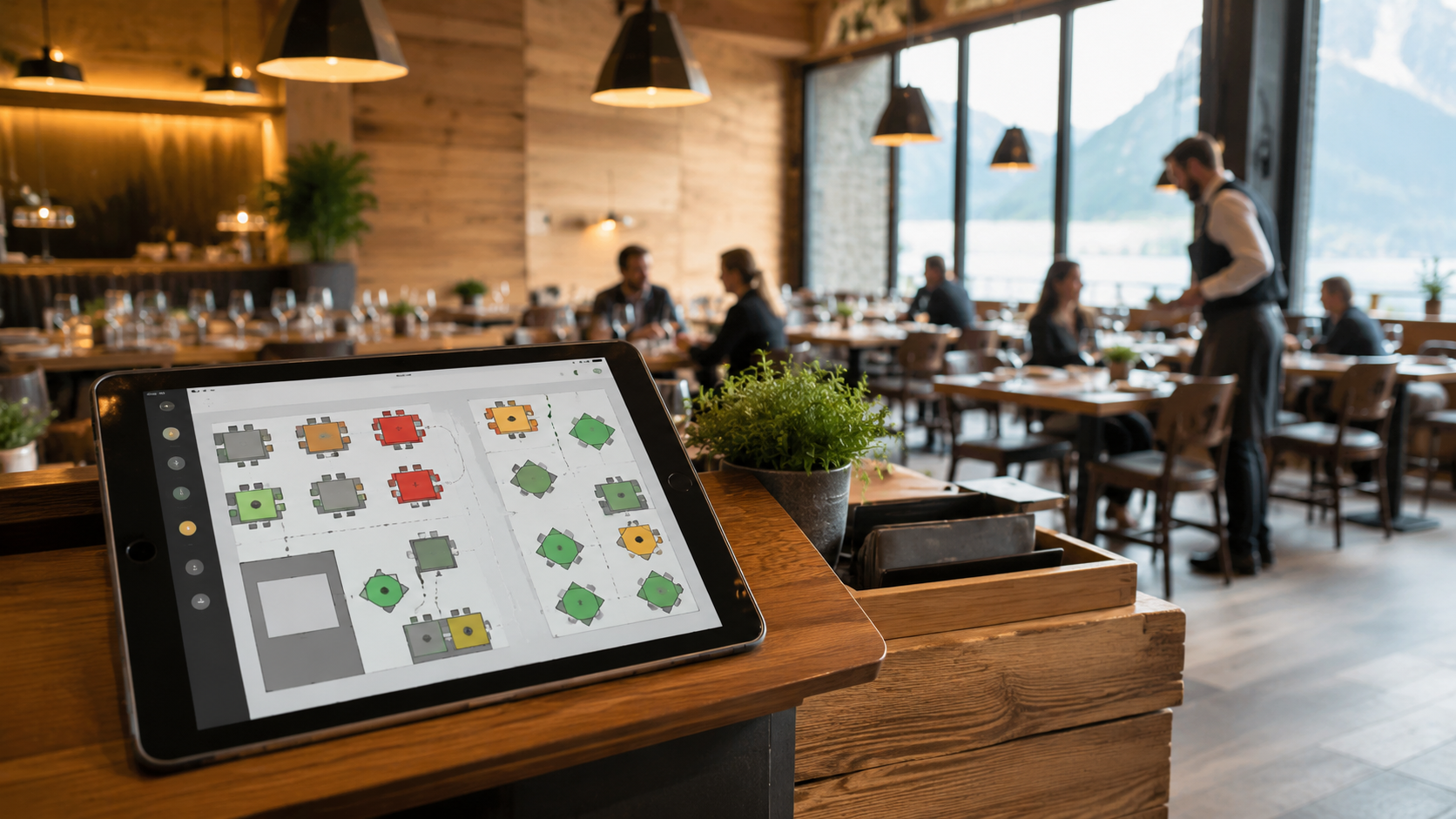
Table turnover is not simply about clearing tables faster. The goal is to align dining-room capacity with service quality, the real length of each visit and upcoming reservations.
Information needed for capacity decisions
- Seats at each table and permitted table combinations
- Arrival time and expected end time
- The next reservation assigned to the table
- Seating, payment, cleaning and ready status
- Typical service duration by daypart and party size
Use clear table statuses
Useful states include available, reserved, seated, ordering, dining, bill requested, paying, needs cleaning and ready. A shared status reduces uncertainty between reception, floor staff, checkout and cleaning.
Coordinate reservations and walk-ins
Reception needs to know how long a table is genuinely available. A walk-in should not be seated at a table whose next reservation cannot be protected. Estimates must be updated when service conditions change.
Reduce operational idle time
The gap between a guest leaving and the table becoming ready is lost capacity. Clear handover from floor staff to payment and cleaning reduces this gap without shortening the guest's visit.
Break waiting into measurable stages
Guests experience one continuous wait, but operations should measure arrival to check-in, check-in to seating, seating to order, order to ready, ready to service, bill request to payment and departure to table-ready time separately.
Use reliable timestamps
Each stage needs a clear event in reservations, reception, ordering, kitchen or payment. End-of-shift guesses are not accurate enough. Exact event coverage depends on the confirmed product configuration.
Do not rely on the average alone
An average can hide a small number of extreme delays. Review the median, high-delay ranges, threshold breaches and comparisons between similar days, time periods, sections and party sizes.
Find the real cause of slow turnover
Low turnover is not always caused by guests staying too long. Delays in seating, order entry, kitchen preparation, service, payment or cleaning can extend the operational occupation of a table. Identify the slow stage before changing reservation duration or staffing.
Correct the cause, not the symptom
- Arrival congestion: space reservations and prepare tables before the wave
- Seating delay: improve live table status and cleaning coordination
- Order delay: balance floor responsibilities and use mobile ordering where configured
- Kitchen bottleneck: review station capacity and menu mix
- Payment delay: create a clear bill-request path and enough checkout points
Pressure on guests is not the solution
The purpose is to remove internal dead time, not force a shorter dining experience. Turnover improvements should be reviewed together with complaints, order corrections, refunds and service feedback.
Practical scenario
Average table occupation is high on Saturday evening. Stage analysis shows normal food timing but a long gap from bill request to payment. Instead of reducing reservation duration, the restaurant assigns clearer payment responsibility and increases available checkout capacity during the peak.
Suggested capacity dashboard
- Available, reserved, seated, paying and cleaning tables
- Current walk-in wait estimate
- Upcoming reservations and tables at risk of delay
- Occupation and reset time by section
- Unusual waits from arrival through payment
How Lonio can help
Depending on the confirmed setup, Lonio can combine reservations, table status, orders, payment events and reports in one operational view. Automatic timestamps, alerts and wait estimates must be validated against the live configuration.
Conclusion
Restaurant table turnover should be managed with real stage data and without reducing the quality of the guest experience.
Frequently asked questions
What is restaurant table turnover?
It describes how long and how often a table is used operationally, including the visit, payment and reset time.
Where should guest wait time be measured?
Measure separate stages such as arrival, seating, ordering, preparation, service, bill request and payment.
Is average wait time enough?
No. Review extreme delays, peak periods, medians and differences between comparable groups and dining-room sections.
Is higher table turnover always desirable?
No. Removing idle time is useful, but guests should not be pressured and service quality must not decline.