Restaurant Cash-Shift Management: From Opening and Handover to Closing and Variance Resolution
Complete guide to restaurant cash-shift management, from the opening float and team handover to cash movements, payment reconciliation and till-variance investigation.
- Bahram Davoodi
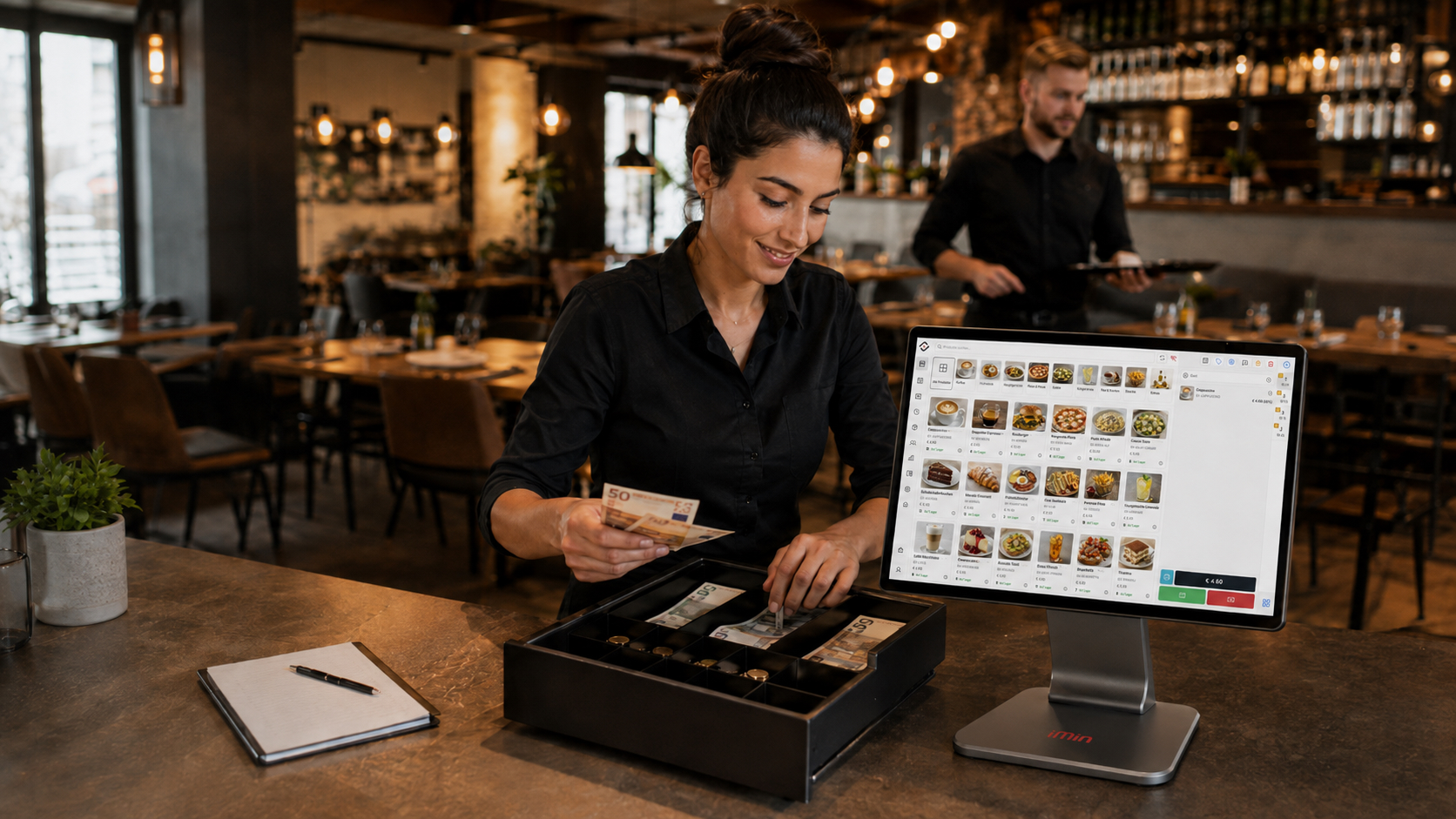
Closing a shift is the point at which recorded sales must be reconciled with cash, card payments, refunds, tips and every movement into or out of the till. When the process is reduced to counting banknotes at the end of the night, unexplained differences remain hidden and often return on the next shift. A reliable shift close should show what amount was expected, what was actually counted and which transaction or process created the difference.
Good control starts before the first sale. The opening float must be counted, users must sign in with individual accounts and any open order or unresolved payment from the previous team must be handed over. During the shift, cash withdrawals, petty-cash expenses and transfers to the safe must be recorded as cash movements rather than sales. At closing, cash, cards, online payments, refunds and tips are reconciled before the shift is locked.
What should a shift-closing report include?
- Gross and net sales for the shift
- Number of bills and average transaction value
- Cash, card, online and mixed-payment totals
- Full and partial refunds
- Discounts, voids and corrected transactions
- Recorded cash and card tips
- Cash paid in, paid out and transferred
- Expected cash and physically counted cash
- Open orders, unsettled tables and unresolved payments
Expected cash versus actual cash
Expected cash is calculated from the opening float, cash sales, cash refunds and recorded cash movements. Actual cash is the amount physically counted at the end of the shift. The difference between the two is the till variance.
The objective is not simply to force the variance back to zero. A correction without an explanation can make the report look balanced while leaving the operational problem unchanged. The useful outcome is a documented cause, an authorised correction when needed and a preventive action for the next shift.
Start the shift correctly
Many closing differences originate at the beginning of the day. The opening float should be counted and compared with the amount entered in the system. Any difference must be recorded before the first sale and reported to the shift manager, so it is not later attributed to the cashier who worked the service.
Before opening, check the POS terminal, tablets, receipt printer, kitchen printer or display, payment terminal, cash drawer and network connection. Each employee should use a personal account with the correct role and branch. Shared logins make it difficult to determine who approved a refund, changed a payment method or reopened a transaction.
Opening checklist
- Count and record the opening float
- Confirm users, roles and branch assignment
- Test payment methods and card-terminal connectivity
- Review menu prices and unavailable items
- Check reservations, open orders and items handed over from the previous shift
- Test receipt printing and a sample kitchen transmission
Record every cash movement
Adding change, taking cash for an urgent purchase, paying a small expense and transferring money to a safe are not sales. Each movement should record amount, movement type, till, branch, user, time, reason and supporting document when appropriate. Vague labels such as “expense” or “transfer” make end-of-day analysis weak.
For example, when a manager transfers €100 from the till to the safe, expected till cash should fall by €100 while sales remain unchanged. The movement report should identify the destination, reason and authorised user. If the transfer is not recorded, the shift will appear €100 short even though the money is still within the business.
Controls for cash movements
- Manager approval for sensitive types or amounts
- Standard reason codes with an optional explanation
- Attachment or reference for urgent expenses
- No silent editing after a shift has been closed
- Reporting by user, till, branch and movement type
Structure the handover between teams
A rushed verbal handover can lose an open order, pending card payment, equipment problem or guest complaint. The handover should be brief but structured, with a status, owner and next action for every important item.
- Open orders, tables and unpaid balances
- Pending, failed or uncertain payments
- Upcoming reservations and guests requiring follow-up
- Unavailable items and temporary menu restrictions
- Unusual cash movements or an unresolved till difference
- Equipment, printer, terminal or network problems
- Open complaints, refunds or corrective actions
- Unfinished duties and expected follow-up time
The incoming supervisor should review and acknowledge the important items. Financial, safety-related and customer-critical issues should appear first rather than being buried in general notes.
Shift-closing checklist
- Review all open orders and unsettled tables.
- Identify failed, pending or uncertain card and online payments.
- Check refunds, voids and changes against authorisation and reason.
- Record any missing cash paid in, paid out or transferred.
- Count cash without displaying the expected amount.
- Reconcile card totals with the payment-terminal report.
- Separate and record cash and card tips according to the restaurant policy.
- Investigate the variance and save a clear explanation.
- Obtain manager approval where required.
- Close and lock the shift against unauthorised changes.
Why blind cash counting helps
If the cashier sees the expected amount before counting, there is a risk of unconsciously counting towards that number or repeatedly recounting only until it matches. A blind count records the physical result first and displays the expected balance afterwards. The count should include user, time, till and denomination details when the operation requires them.
Common causes of till discrepancies
- Cash recorded as card or card recorded as cash
- A refund paid to the guest but not registered
- Cash taken for an urgent purchase without a movement record
- An error in split or mixed payment
- Cash tips not separated from the till
- An open order or bill left unsettled
- Incorrect opening float
- Counting, denomination or change-giving error
- A transaction edited after the payment was completed
How to investigate a difference
Begin by comparing the variance with payment-method differences. If cash is lower and cards are higher by the same amount, an incorrect payment method is a likely cause. Then review refunds, voids, split payments, cash movements and open orders. User history should show who created or changed each event.
Look for matching amounts before reviewing every transaction. A €30 cash shortage combined with a €30 card overage is a stronger clue than a general sales difference. When the cause is found, the correction should follow an authorised workflow and retain the original history rather than deleting the evidence.
Role-based permissions and separation of duties
Not every employee should be able to refund a payment, change a completed payment method, reopen a closed shift or remove a cash movement. Role-based permissions reduce risk while an audit trail preserves accountability. Sensitive corrections may require approval by a manager who did not create the original transaction.
The control should remain practical. Ordinary sales must stay fast, while exceptional actions receive stronger permissions and better documentation. Periodic access reviews are useful when employees change role, location or employment status.
Practical example
The system shows expected cash of €840, while the blind count produces €810. The payment report shows card receipts €30 above the POS card total. Investigation finds one €30 payment recorded as cash even though the guest paid by card. After an authorised payment-method correction, both cash and card reports agree with reality and the reason is stored in the audit history.
Reports a manager should monitor
- Till variance by shift, branch, till and user
- Number and value of voids and refunds
- Mixed payments and payment-method corrections
- Tips by payment method
- Open orders present at shift close
- Cash movements by reason and approver
- Repeated discrepancy patterns by weekday, time or employee
A single small difference may be a counting mistake. A repeated pattern can indicate unclear procedures, missing training, incorrect opening floats or misuse. Trend reporting helps management focus on the process rather than blaming one employee without evidence.
Complete shift-control flow
- Open with a verified float and an identified user.
- Record sales, payments, refunds, tips and cash movements during the shift.
- Hand over open operational and financial items to the next team.
- Review open orders and uncertain payments.
- Perform a blind cash count.
- Reconcile cards, online payments, refunds and tips.
- Document the variance and obtain the required approval.
- Close the shift and prevent unauthorised editing.
How Lonio supports the process
In Lonio reports, managers can review sales, payment methods and shift information, while the POS records sales and payment events. User roles can be organised through user management. The restaurant and café solution places shift closing within the wider operating workflow.
The exact behaviour of card terminals, online-payment providers and accounting exports depends on the configured integrations and must be tested before go-live.
Conclusion
Shift closing is not merely late-night administration; it is a daily internal control. When opening float, sales, payment methods, tips, refunds and cash movements appear in one traceable flow, till discrepancies can be explained faster. The manager can then correct the underlying process instead of relying on guesswork or repeatedly overwriting the balance.
Frequently asked questions
What is a till discrepancy?
It is the difference between the expected cash balance calculated by the system and the physical cash counted at the end of the shift.
Does every discrepancy mean money is missing?
No. An incorrect payment method, unrecorded tip, cash movement, refund or opening float can also create a difference.
Should every employee be allowed to correct a discrepancy?
No. Refunds, payment-method changes and reopening a closed shift should normally be limited to authorised roles and retained in the audit history.