Digital Restaurant Receipts in Austria: Current Rules and the 1 October 2026 Change
An up-to-date guide to digital restaurant receipts in Austria, explaining the rules before and after 1 October 2026, paper requests, privacy and retention.
- Bahram Davoodi
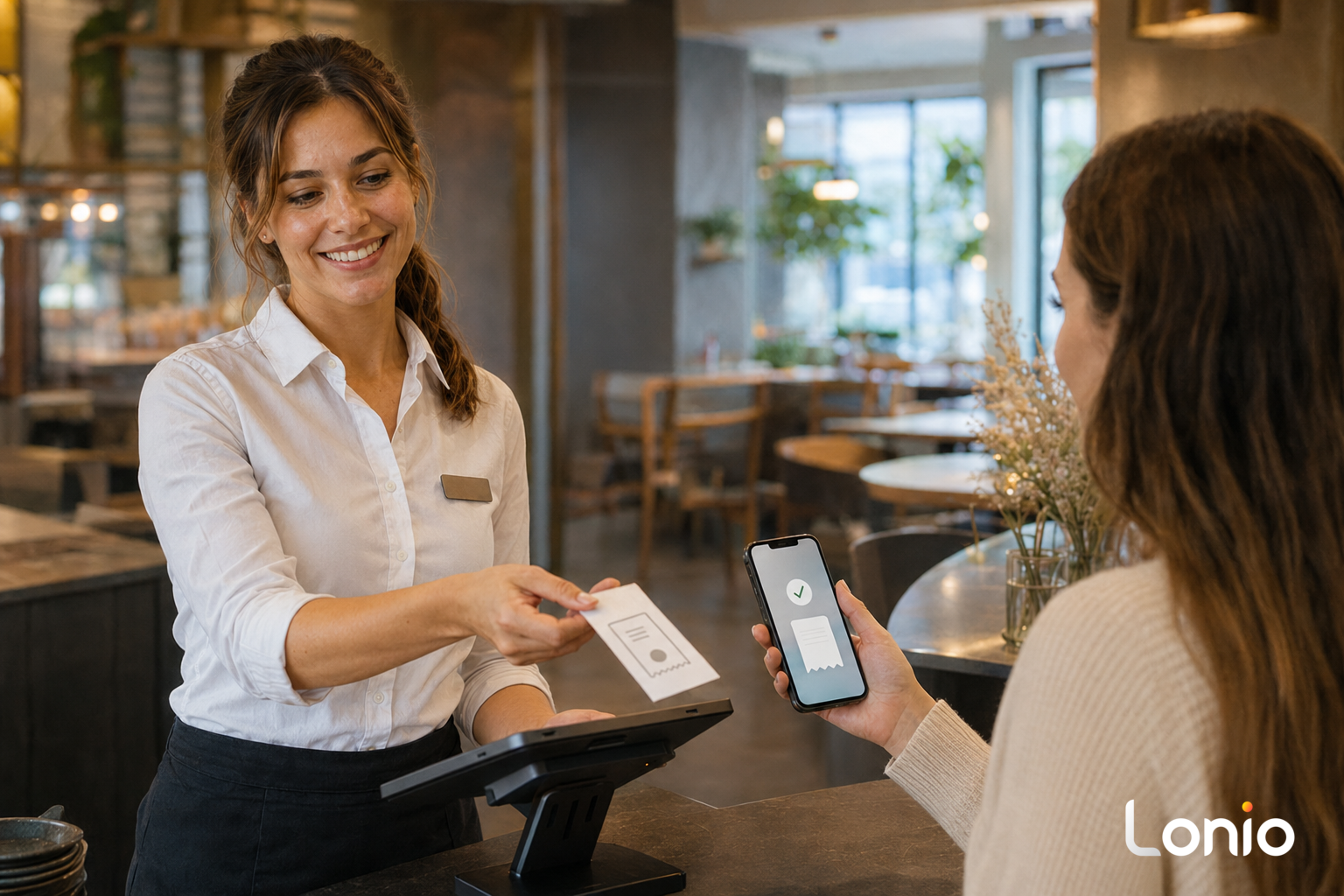
Digital receipts can reduce paper use and make documents easier to retrieve, but they remain part of the regulated sales, cash-register and accounting process. Austrian restaurants should distinguish the receipt issued for a payment from an invoice prepared for accounting or customer-specific purposes.
Receipt and invoice are not the same document
A cash-register receipt records the underlying payment transaction. An invoice may require additional customer, tax or business information depending on the transaction and intended use. The document type, tax fields and layout should therefore be validated with the responsible Austrian accountant or tax adviser.
Rules up to 30 September 2026
Before the new simplification takes effect, an electronic receipt must be created and signed by the cash register directly in connection with the cash payment and transferred into the customer’s sphere of control, for example by email or through an application where the customer can receive and retain it. A brief on-screen display alone should not automatically be treated as completed electronic delivery.
What changes on 1 October 2026
From 1 October 2026, the business may also make the electronic receipt readable at the place of payment. The receipt content or a QR code can be displayed for long enough that the customer can scan or photograph it with their own device. The receipt must still be created and signed in the payment flow. The technical ability to print must remain available because the customer or a tax authority officer can request a paper receipt.
Create the receipt from the original transaction
The digital document should be linked to the same sale, register, timestamp and unique receipt number. It should not be reconstructed later from an aggregated report. Where cash-register rules apply, the register identifier, signature information and machine-readable code must remain intact.
Core receipt information
- Unique business identification.
- Continuous and unique receipt number.
- Date and time of issue.
- Quantity and customary description of goods or services.
- Amount paid and configured tax-rate breakdown.
- Cash-register identification and machine-readable code where required.
These fields do not replace invoice requirements. Customer data, invoice numbering and tax wording should be controlled according to the selected document type.
Permitted delivery paths
- Paper printout.
- Email to an address confirmed by the customer.
- Digital transfer through an app or customer account.
- From 1 October 2026, local reading through a display or QR code that can be scanned or photographed.
The chosen path should let the customer obtain and retain the document. Staff need a clear fallback when the display, printer, network or email delivery fails.
Privacy and customer contact data
Collect only the contact information needed to send the receipt. An email address or telephone number supplied for document delivery should not automatically be added to marketing. Purpose, access rights, retention and deletion rules should be documented separately.
Reprint and resend without a new sale
Authorised staff should be able to find the receipt by order, payment, date or receipt number and resend or print the same document. A reprint must not generate a second sale, a new payment or an unrelated receipt number. The action should be logged.
Cancellations, corrections and refunds
A cancellation, correction or refund should remain linked to the original transaction, original payment method and approving user. The audit trail should show what changed and why without overwriting the original record.
Retention and retrieval
Austrian guidance generally requires accounting records, receipts and electronic cash-register records to be retained for seven years, starting from the end of the relevant calendar year. Longer or special periods may apply, and documents must remain complete, ordered, readable and reproducible throughout the applicable period.
Practical restaurant scenario
After payment, the guest chooses a digital receipt. The register creates and signs the receipt. From 1 October 2026, a scannable QR code is shown on the customer display. If the guest asks for paper, the same receipt is printed. A later resend uses the existing record and does not create a new sale.
Implementation checklist
- Confirm receipt and invoice templates with an Austrian specialist.
- Test signing, QR readability and paper fallback.
- Define staff permissions for search, reprint, resend and refund.
- Separate receipt-delivery contact data from marketing consent.
- Test retention, export and retrieval for an audit.
- Review the process before and after 1 October 2026.
How Lonio can be assessed
Depending on the confirmed configuration and cash-register integration, Lonio may support document generation, delivery choices, reprints, refund links, permissions and accounting exports. Legal conformity, signature behaviour, retention and provider-specific integrations must be verified before publication or deployment.
Conclusion
A digital receipt is not merely a paper receipt converted into a file. It is part of the transaction, register, privacy and accounting workflow and should be implemented with documented controls.
Frequently asked questions
What changes on 1 October 2026?
An electronic receipt may also be made readable at the place of payment, for example through a QR code shown long enough to scan or photograph.
Can a customer still request paper?
Yes. The technical option to print must remain available for a customer or tax authority request.
How long are receipt records retained?
Austrian guidance generally requires receipts and accounting records to be retained for seven years, subject to longer special rules.
Can a receipt email be used for marketing?
Not automatically. Marketing requires a separate legal basis and privacy control.