Einwegpfand at the Till: Handling the 25-Cent Deposit Correctly
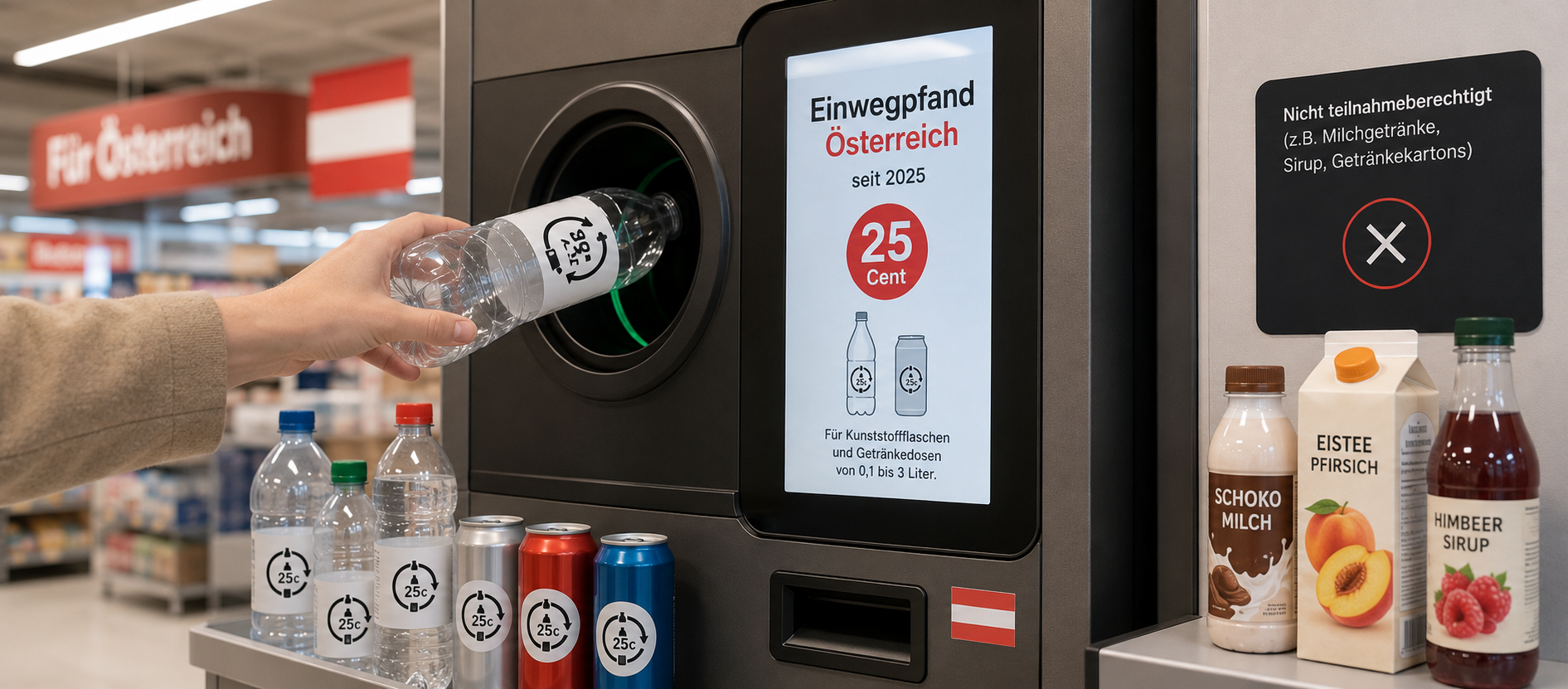
Since 1 January 2025, Austria has applied an Einwegpfand (single-use drinks deposit) of 25 cents to drinks in plastic bottles and cans from 0.1 to 3 litres. Milk and milk drinks as well as beverage cartons are among the exemptions.
- Bahram Davoodi
Einwegpfand in Austria: the rules since 2025
Since 1 January 2025, Austria has applied an Einwegpfand (single-use drinks deposit) of 25 cents to drinks in plastic bottles and cans from 0.1 to 3 litres. Milk and milk drinks as well as beverage cartons are among the exemptions. Packaging subject to the deposit carries the uniform Austrian Pfandlogo (deposit logo); the scheme is run through the central body EWP Recycling Pfand Österreich.
What does this mean for retailers and hospitality?
- Registration: Anyone selling deposit-bearing drinks registers with the central body (EWP).
- Collecting the Pfand (deposit): At the point of sale, the 25 cents per container are charged on top and shown on the receipt.
- Take-back obligation: Leergut (empties) is taken back – via reverse vending machines or, in smaller businesses such as bakeries and petrol stations, by hand – and the deposit is paid out.
- Conditions for the refund: The Pfandlogo and barcode must be readable, and the container must be empty and uncrushed.
How Pfand works in the Lonio POS system
Lonio handles deposits as a dedicated building block – automatically and manually:
- Store the deposit on the product: every product can carry its own deposit amount (e.g. the 25-cent Einwegpfand or a Mehrweg (reusable) crate deposit).
- Automatic prompt at the till: when a deposit-bearing item is added, the till asks whether the deposit should be booked as well – the amount appears as a separate deposit line in the totals and on the receipt.
- Returning deposits: when Leergut comes back, a single tap (“Return deposit”) is enough: enter the quantity, and the amount is offset against the current receipt or paid out in cash.
- Clean reporting: deposits flow into totals and reports separately from revenue and tax – the basis for correct bookkeeping.
This applies to single-use deposits just as it does to classic Mehrweg deposits on returnable bottles and crates – the till handles both through the same mechanism.
Bookkeeping and VAT
The VAT treatment of the Einwegpfand follows its own rules; how deposit amounts should be handled correctly in your bookkeeping is best clarified with your tax adviser. What matters from the till’s perspective: the deposit amount is shown separately on the receipt and can be analysed separately in the reports.
Conclusion
The Einwegpfand has been part of everyday retail in Austria since 2025. With a till that treats deposits as a dedicated building block – from the automatic surcharge to returns at the tap of a button – the process at the counter stays fast and the reporting stays clean. How this looks in detail is shown in the feature overview of the Lonio till – tailored also to retail.
How much is the Einwegpfand in Austria?
25 cents per container – uniform for deposit-bearing plastic bottles and cans from 0.1 to 3 litres (since 1 January 2025).
Do I have to take back Leergut as a small business?
In principle, yes – smaller businesses without reverse vending machines take empties back by hand and pay out the deposit directly. The details are set out in the Pfandverordnung (deposit regulation); the central body EWP provides information on your specific obligations.
How do I record Pfand at the Lonio till?
You don’t have to do anything extra: if a deposit amount is stored on the product, the till asks automatically when the item is added and books the deposit as a separate line. Returns run through “Return deposit” with the quantity.
Does the Einwegpfand also apply in hospitality?
If a business sells deposit-bearing containers to take away, the deposit applies just the same. For drinks served on site where the container is not handed over, the question generally does not arise – if in doubt, the EWP guidance will help.
Sources: USP – Single-Use Deposit in Austria · WKO – Deposit Regulation for Single-Use Drinks Packaging · oesterreich.gv.at – New Deposit System Since January 2025
Note: This article is provided for general information and is no substitute for legal or tax advice. For the specific situation of your business, please contact your tax adviser.