Organising custom cake orders: from enquiry to collection
A birthday cake is not an ordinary counter sale. Between enquiry and collection come design decisions, scheduling, purchasing and often several changes. One shared order record prevents the bakery from working to a different version from the sales team.
- Bahram Davoodi
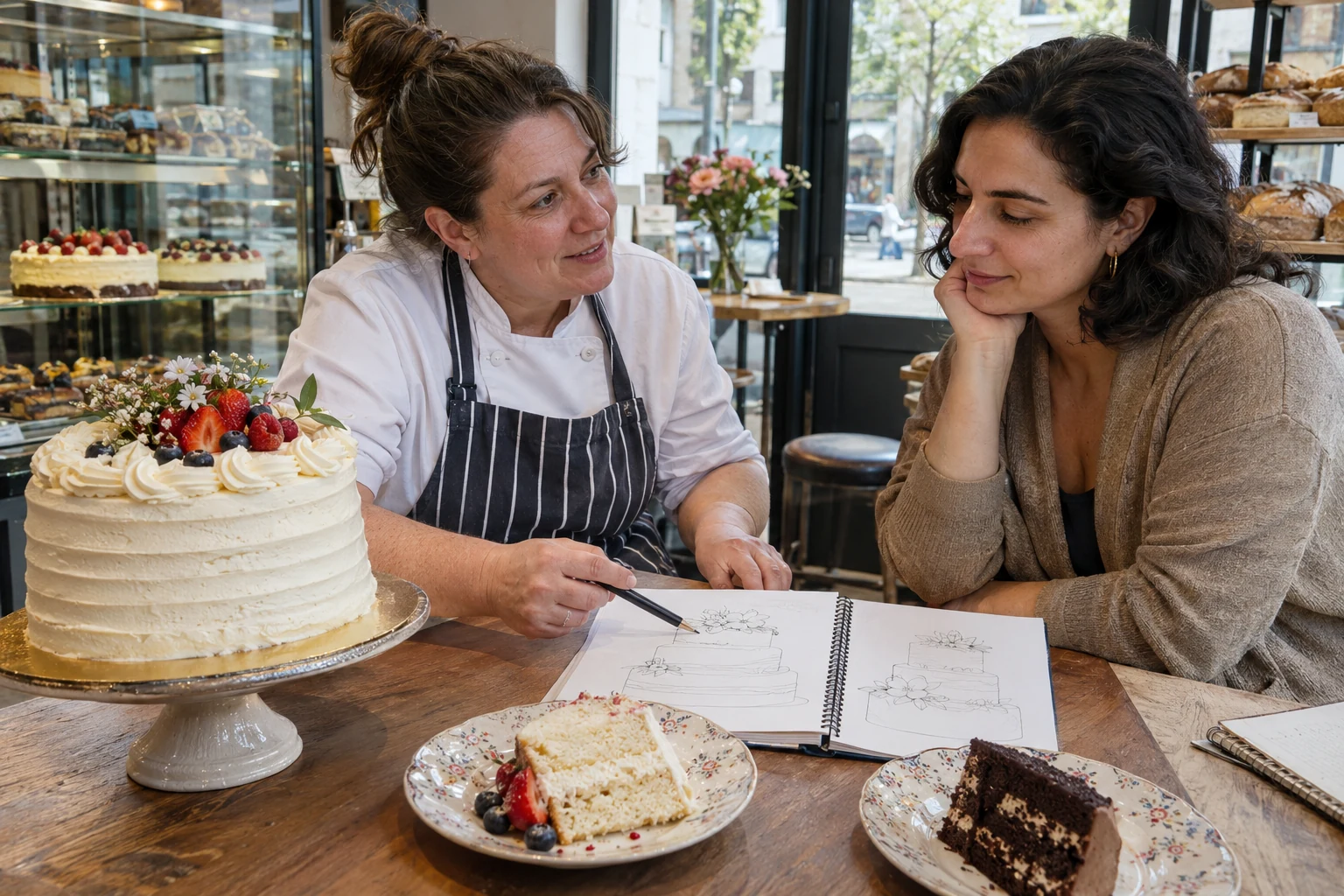
A birthday cake is not an ordinary counter sale. Between enquiry and collection come design decisions, scheduling, purchasing and often several changes. One shared order record prevents the bakery from working to a different version from the sales team.
Start with a complete order
Record more than a name and collection date: contact details, occasion, portions or size, flavour, design, requested wording, handover method and agreed time window. Attach the price, payment status and responsible contact. Check ingredient and allergen information against reliable product records; a customer request must not become an unverified assurance.
Use a unique order number. Reference pictures help but do not replace a written description of the agreed result. Resolve questions about colours, decoration and personalised wording before approval.
Keep approval separate from payment
A payment does not automatically settle every design question. Use separate stages: enquiry, quotation, design approved, production scheduled, ready and handed over. Track payment alongside those stages.
An illustrative example uses gross prices: the agreed total is €180 and the deposit €60, leaving €120 outstanding. The customer later requests additional decoration costing €20. Confirm the change and revised total explicitly. After approval, the order totals €200 and the outstanding balance is €140. Do not count the deposit again as additional sales revenue; the receipt and accounting treatment must match the actual transaction.
Prepare the production day list
Sort work by completion and handover time. Include the order number, product, quantity, approved design, any verified special requirements and production status. Unconfirmed changes must be visible so that these orders do not accidentally enter production as fully approved work.
Check capacity before promising a time. Two elaborate cakes with the same collection deadline may need more preparation than several standard orders. A commitment becomes dependable only after materials and working time have been considered.
Match collection to the order
At handover, check the product, customer or order number, and remaining payment. Transport and storage instructions must relate to the actual product. Record collection so that the team does not later chase an apparently open order.
Sales information in Lonio can provide the shared reference point. Check where approvals, attachments and production notes are held in your actual workflow. The guide to organising bakery counter sales complements this process for day-to-day trading.
Common questions
Should every change create a new order? Usually a traceable revision within the same transaction is more helpful. Production must clearly identify the approved version.
When should collection be confirmed? Once the specification, capacity and necessary materials are settled. An initial enquiry should not look like a firm production commitment.