Payment on invoice and instalments: what Austrian online shops should check since November 2026
What Austria’s VKrG 2026 means for B2C online shops: own invoices, conditional 50-/14-day exemptions, external BNPL providers and practical checks.
- Bahram Davoodi
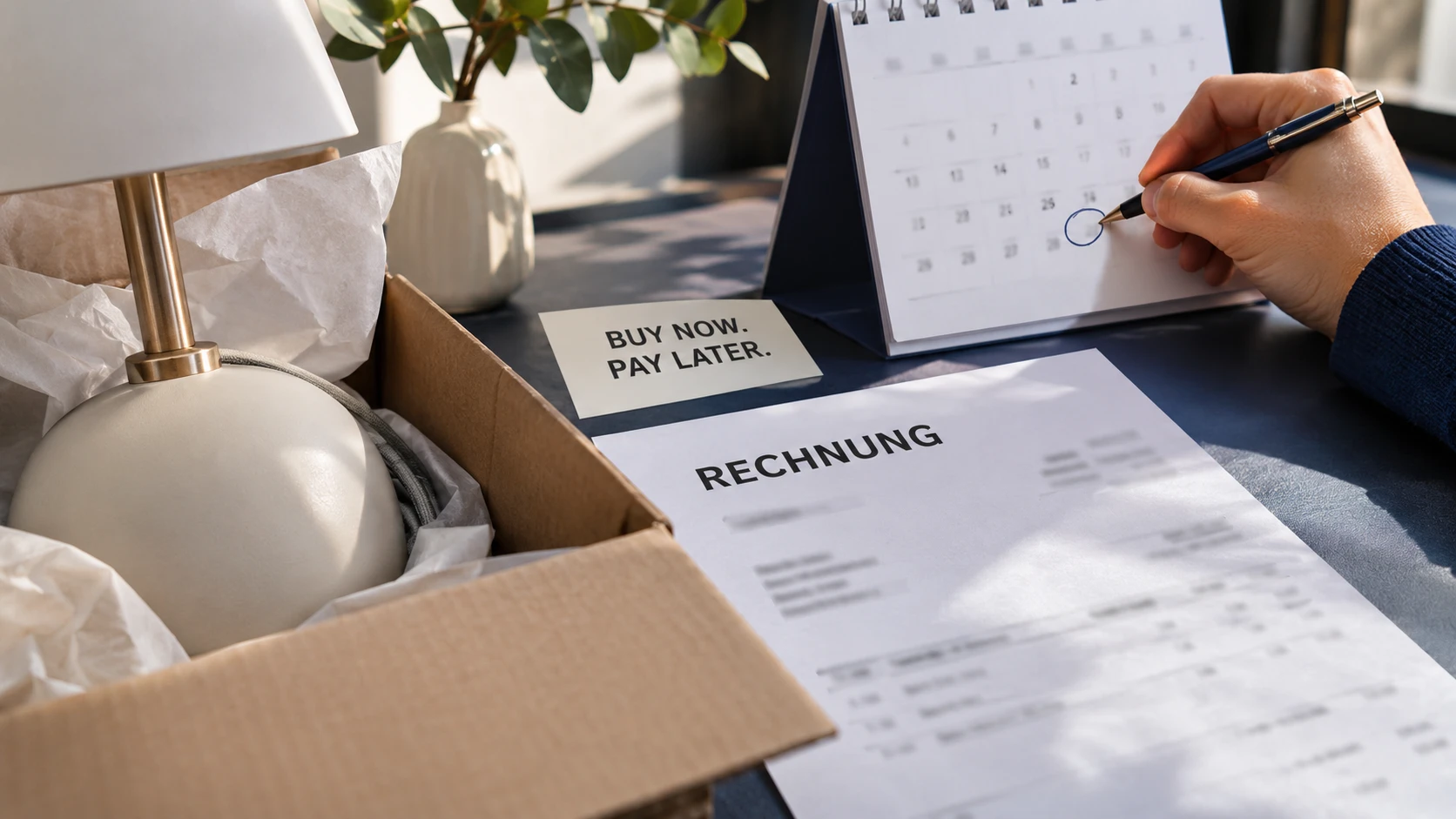
As of 26 November 2026
The checkout says “pay later”. That can cover different arrangements: an invoice from your shop, your own instalment agreement or credit from an external provider. This distinction has been particularly important for Austrian B2C online shops since 20 November 2026. The Consumer Credit Act 2026 also covers interest- and charge-free credit arrangements that were previously exempt. This does not amount to a general ban on payment on invoice. The contractual arrangements and statutory exemptions are what matter. USP explains the extension of the scope.
When did the change take effect?
Under section 45 of the VKrG 2026, the Act generally applies to credit agreements concluded and credit arrangements granted after 19 November 2026. Certain provisions also apply to some existing agreements of indefinite duration. An older framework agreement therefore does not automatically place every subsequent transaction outside the new rules.
Your own invoice: 50 days is a conditional exemption
For an online shop meeting the EU definition of an SME, a payment period granted by the shop itself may fall within the exemption in section 39(2), point 3. All the following conditions must be met together:
- The retailer grants the deferral itself; no third party offers the credit.
- The price must be payable without interest or fees. Only limited, legally compliant charges for late payment remain permissible.
- Full payment must be due no later than 50 days after delivery of the goods or provision of the service.
The 50 days therefore do not automatically run from the order or invoice date. SME status should also be checked; describing a business as a “small online shop” is not sufficient.
For non-SMEs providing the online distance-selling services described in the Act, this exemption is narrower: full payment must be due within 14 days of delivery or provision of the service. In addition, no third party may acquire the payment claim. This special rule warrants separate assessment for affiliated businesses and mixed sales models.
External BNPL: the actual role matters
A payment service provider that merely processes payments is not an external lender solely for that reason. However, if a third party offers the payment deferral as credit, the retailer exemption described above does not apply. The obligations falling on the shop depend, among other things, on its contractual role. WKO expressly highlights unresolved questions about involving third parties.
Ask the provider for a written allocation of roles: who grants the credit, who holds the claim and which tasks does the shop undertake? A marketing statement such as “everything is taken care of” does not replace this clarification.
Two everyday shop situations
Your own invoice: An Austrian SME delivers a lamp on 1 December. Its own invoice is payable in full on 15 December, without interest or fees. No third party offers credit. On these assumed facts, the arrangement falls within the retailer exemption described above.
External instalment payments: The same shop also offers three monthly instalments through a finance provider. The 50-day exemption cannot simply be carried over to this arrangement. This payment method requires a separate assessment of its contractual roles and terms.
Five points you can check now
- List every payment method actually offered to consumers.
- Identify the lender and the holder of the claim for each payment method.
- Compare deadlines and charges in the checkout, terms and invoice.
- Check which delivery or service date determines the payment period.
- Document unresolved questions and clarify them with the payment provider or a legal adviser before making changes.
Frequently asked questions
Do I have to disable payment on invoice? No. First check whether your specific arrangement meets the conditions of an exemption. The new rules do not require blanket disabling.
Does every online shop have to assess creditworthiness itself? There is no universal answer. The exemptions and the shop’s actual role are decisive.
Consider the entire business process
Lonio is an integrated system for the entire business. Consider your website, orders, invoices and payments together with your POS system. Information about Lonio’s website and e-commerce offering can help you assess the scope. Clarify the specific functionality with Lonio. This article confirms neither a particular BNPL integration nor automatic legal checks by the product. It provides general guidance and does not replace an assessment of your contractual arrangements.