POS System for the Garden Terrace: Table Splitting, Tips and Kitchen Tickets in the Summer Season
Table splitting, tips in cash and by card, kitchen tickets and the end-of-day close: these POS features relieve hospitality businesses in the summer season – with checklist.
- Bahram Davoodi
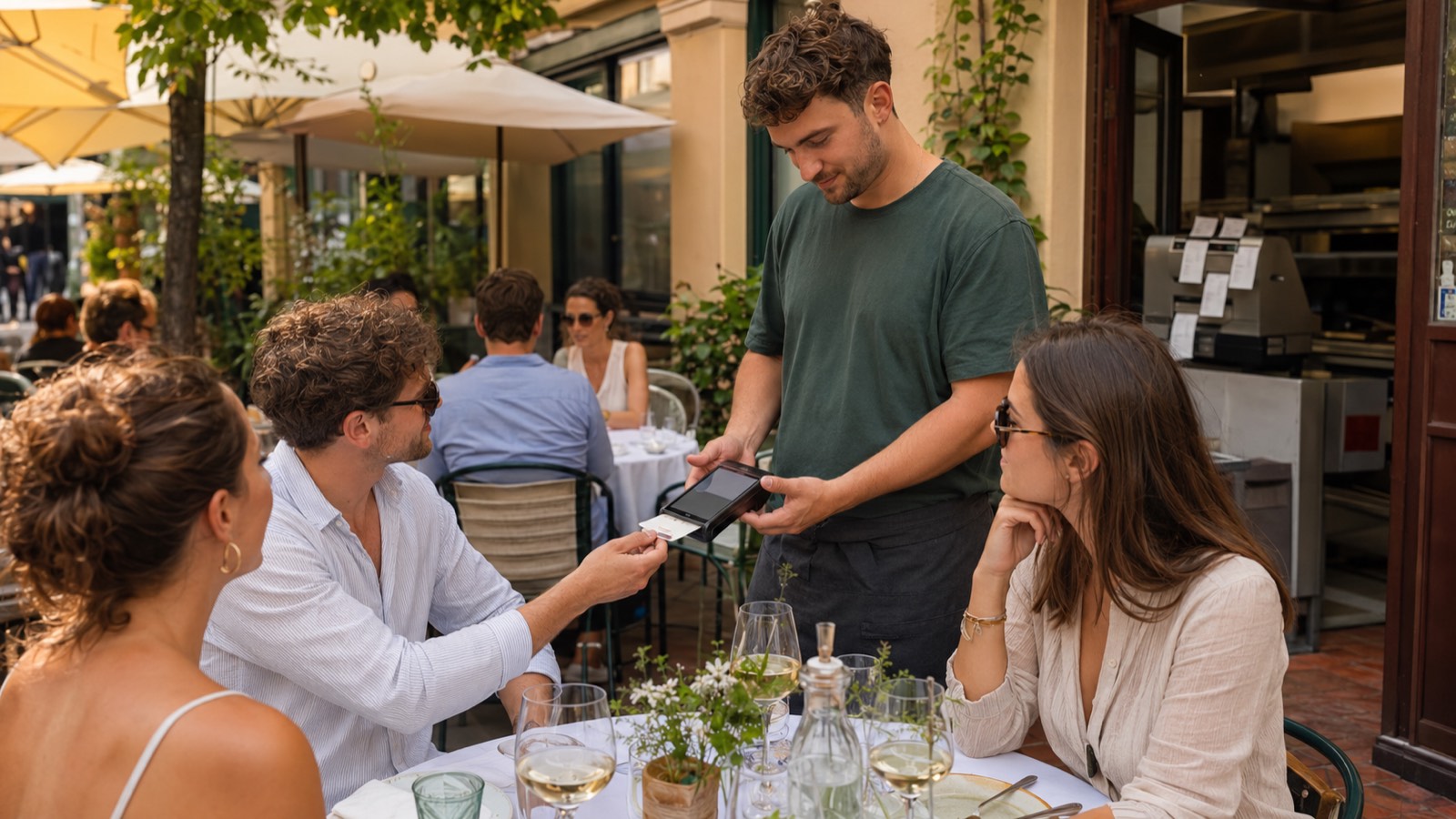
A full garden terrace (Gastgarten) is the best sign of a successful summer – and at the same time one of the toughest stress tests for service, kitchen and cash register.
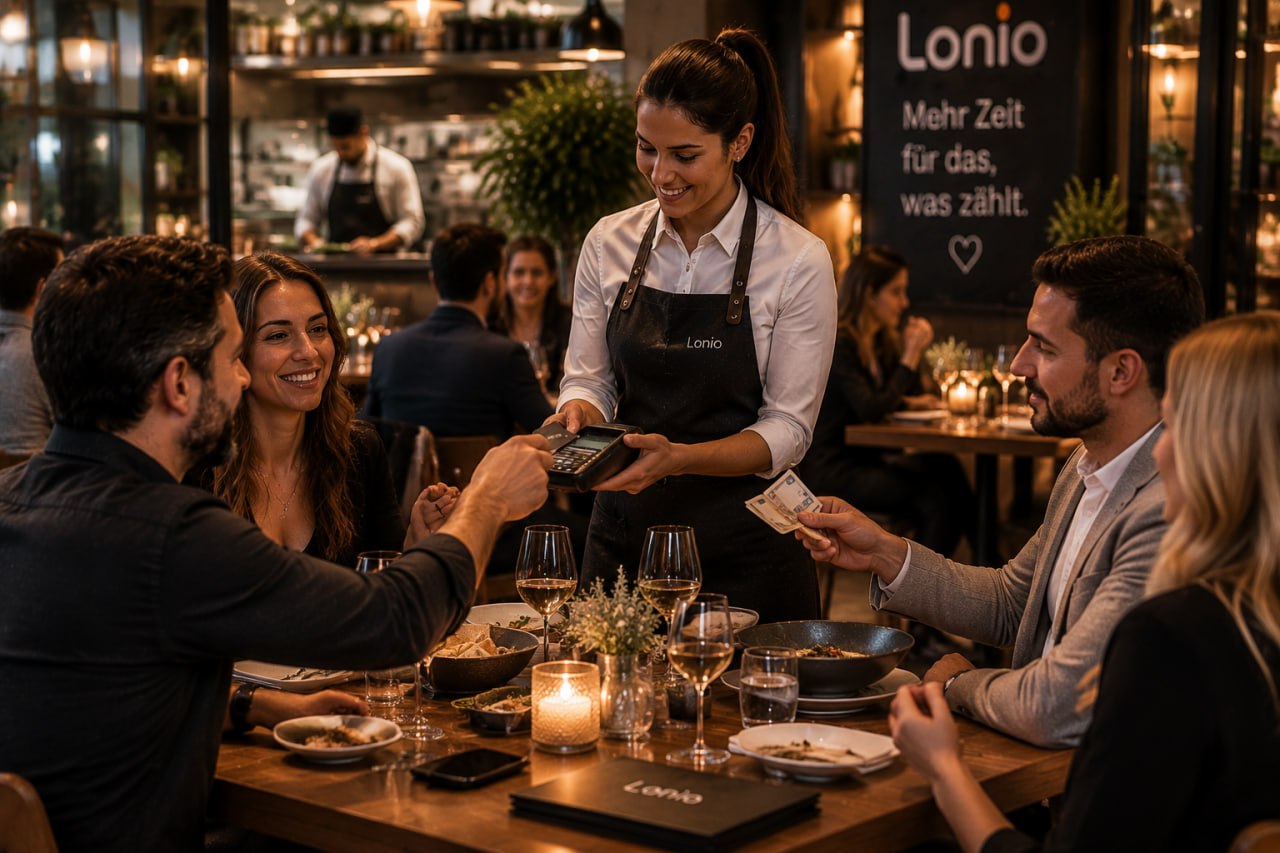
Several tables order at the same time, guests want to pay separately, tips are given in cash or by card, and orders have to reach the kitchen and bar counter without delay. It is precisely during peak hours that a POS system shows whether it truly relieves the team or creates extra work.
In this article, you will learn which POS features give hospitality businesses in Austria particular support during the summer season and how typical workflows on the garden terrace can be made more efficient.
Peak hours: why summer is especially demanding for the cash register
Between 12 and 2 p.m. and again in the evening, many processes run in parallel on the garden terrace: new tables are seated, more drinks are ordered, special requests are passed on and bills are prepared.
In this situation, every extra step costs time. If the service team constantly has to move between the garden terrace, the bar counter and the register, waiting times and mistakes can occur.
It therefore helps to have a POS system that:
- lets staff take orders directly at the table,
- organises the table plan clearly by indoor area, terrace or garden,
- provides quick-select buttons for frequently sold items,
- and automatically routes orders to the right preparation station.
This keeps the ordering process clear even when several tables want to order or pay at the same time.
Table splitting: separate bills without unnecessary waiting
“We’re paying separately” is part of everyday life in many hospitality businesses. Especially with larger groups, splitting the bill has to work quickly and transparently.
A modern POS system should support several variants:
- assigning individual items to one person,
- splitting shared items across several guests,
- dividing the total amount evenly,
- combining cash and card payments within one table,
- and documenting several partial payments cleanly.
If items are actually distributed across several separate bills, the POS system should generate correct and traceable receipts from them. A shared table bill paid by several guests must also be recorded clearly and completely in the system.
What matters is that the service team does not have to delete items manually, re-enter orders or laboriously move items between bills.
Recording tips transparently – in cash and by card
Tips are no longer given exclusively in cash. With card payments, guests can often select the desired amount directly at the terminal or have the service team enter it.
For a transparent end-of-day close, it is advisable to document tips separately from regular revenue. This makes it possible to trace later:
- how much was tipped in cash,
- what amount came in via card payments,
- how tips are distributed within the team,
- and which amounts are relevant for payroll and the tax advisor.
Particularly since the more uniform Austria-wide tip regulations applying from 2026, hospitality businesses should define a clear internal process together with their tax advisor or payroll team.
A suitable POS system supports these processes without mixing tips into the actual goods or service revenue.
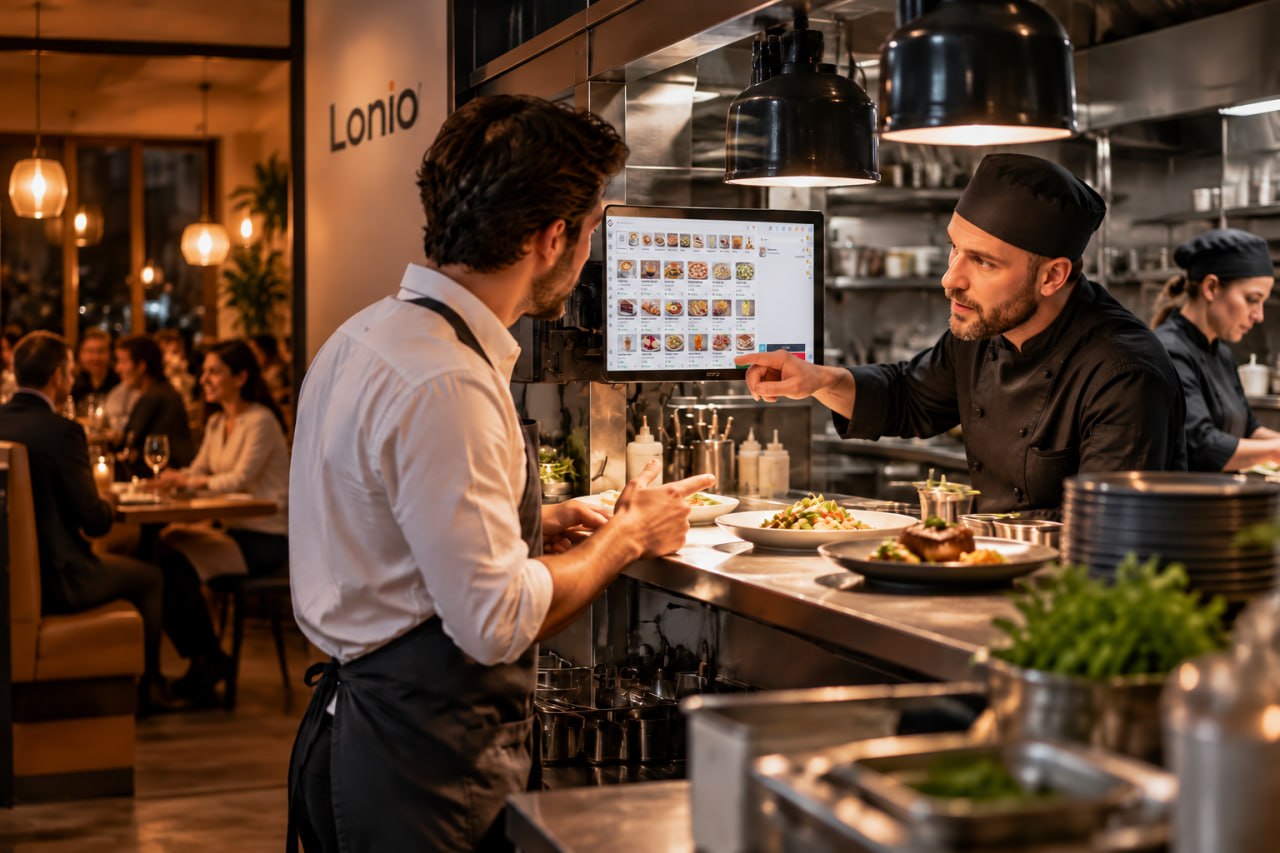
Kitchen and bar counter: orders without shouting or paper chaos
The larger the garden terrace, the longer the distances between service, kitchen and bar counter. When orders are passed on verbally or noted on handwritten slips, the risk of misunderstandings and delays increases.
Routing orders directly from the register can bring real relief here. Depending on the business, orders can be sent to different stations, for example:
- food to the kitchen printer or kitchen display,
- drinks to the bar counter,
- desserts to a dedicated station,
- or specific product groups to a separate work area.
Alongside the table and order numbers, the course sequence, quantities and special requests should also be transmitted unambiguously.
This lets the service team spend more time with guests and less time walking between the garden terrace, counter and kitchen.
The end-of-day close after a long summer day
Once the last guest has left, the end-of-day close should run as clearly and as structured as possible.
In many businesses, this includes:
- counting the cash,
- reconciling card payments,
- recording tips or preparing them for later distribution,
- checking for possible discrepancies,
- and generating the end-of-day report, the Z-report (Z-Bon).
A POS system that reports cash revenue, card payments, vouchers and tips separately can shorten this process considerably.
The data is then available in structured form for reports, exports or further processing by bookkeeping and the tax advisor. This reduces the effort spent on manual transfers and subsequent corrections.
Checklist for the high season
Before the summer season begins, hospitality businesses should run through their most important POS workflows once in full:
- Set up quick-select buttons for frequently sold summer items
- Update garden terrace areas and table plans
- Test table splitting and partial payments with the team
- Record cash and card tips clearly
- Check kitchen and bar tickets for correct routing
- Test course sequence and special requests
- Assign responsibilities for the end-of-day close
- Check that the card terminal and cash register reconcile correctly
- Keep spare paper and printer supplies on hand
- Train the team for peak hours and typical special cases
Conclusion
The summer season does not forgive complicated or unclear processes. When table splitting, tips, kitchen communication and the end-of-day close are cleanly handled in the cash register, the service team can serve more guests with less stress.
At the same time, payments, receipts and closing data are documented traceably – an important advantage for day-to-day operations and later bookkeeping.
With Lonio, core workflows in hospitality businesses can be organised clearly and flexibly. Would you like to make table splitting, tips, kitchen tickets and the end-of-day close easier to manage in your business? In a free initial consultation, we will show you how your existing workflows can be implemented with Lonio.
Note: This article is for general information purposes and does not replace legal or tax advice. For binding information, please contact your tax advisor or the competent authority.