Click & Collect Austria: Connect Your POS, Online Shop & Inventory
Learn how Austrian retailers can connect POS, online shop and inventory to run Click & Collect without overselling — plus practical steps, a checklist and RKSV notes.
- Bahram Davoodi
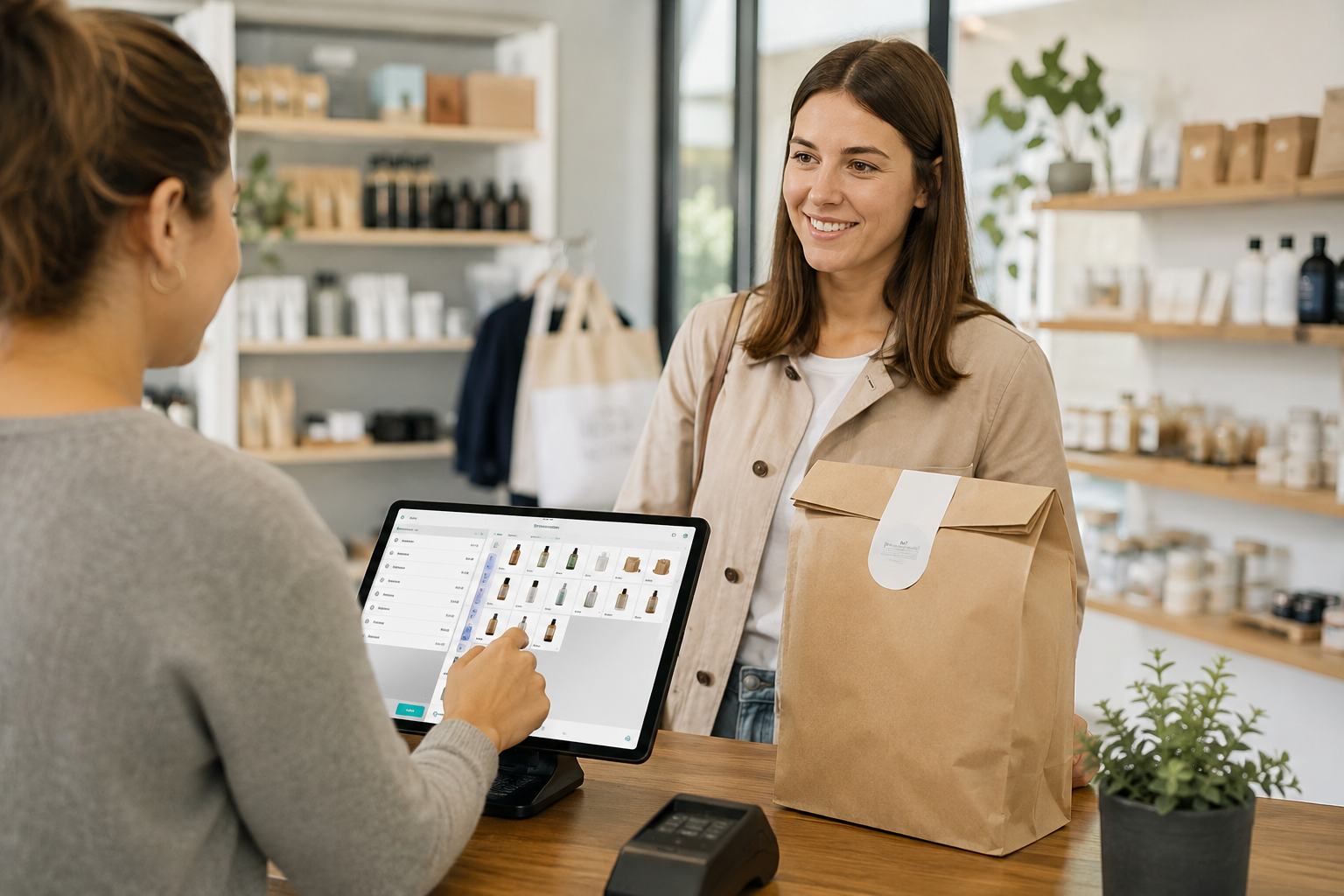
When a customer in Austria sees "in stock" on your website, they expect that promise to hold true the moment they walk into your shop. Click & Collect Austria — letting people order online and collect in store — is one of the most effective ways to turn online demand into real footfall, upsell opportunities and loyal local customers. But it only works when your point of sale, your online shop and your inventory speak the same language. This guide explains how connecting these systems prevents overselling, keeps your Warenbestand (stock levels) accurate across every location, and delivers a smooth pickup experience. It is written for information only and is not tax or legal advice.
Why Click & Collect Austria breaks without connected systems
On paper, Click & Collect is simple: a shopper reserves an item online and picks it up later. In practice, problems appear the moment your channels run on separate, disconnected tools. If your online shop shows one number, your point-of-sale system shows another, and a spreadsheet shows a third, someone eventually sells stock you no longer have.
The classic failure is overselling. A customer orders the last jacket online at the same time another customer buys it at the till. One of them will be disappointed, and you will spend time apologising, refunding and rebuilding trust. Manual re-keying of orders, delayed stock updates and no single source of truth all make this worse. The root cause is almost never the idea of Click & Collect — it is the gap between systems.
What connecting your POS and online shop actually solves
When your till, your online shop and your stock records are joined up, every sale — online or in store — updates the same live figure. That one change removes most of the friction retailers experience. The table below contrasts a set-up with separate, disconnected tools against a connected one.
Area Separate systems Connected systems Inventory accuracy Numbers drift between channels; frequent manual corrections One live figure updated by every sale, return and delivery Click & Collect order handling Orders re-keyed by hand; easy to miss or duplicate Orders flow straight to a pickup queue with clear status Overselling risk High — the same item can sell twice at once Low — stock is reserved the instant an order is confirmed Customer experience Uncertain availability, slow collection, apologies Reliable "ready to collect" messages and fast handover Reporting Figures stitched together from several exports Unified sales and stock reporting in one place
How your Warenbestand must work per location (Standort)
Accurate stock is the foundation of Click & Collect, and in Austria the word to keep in mind is Warenbestand — your on-hand inventory. If you operate more than one Standort (location or branch), your inventory management has to track availability per site, not just as one company-wide total. A jumper that is available in Graz is of no use to a customer collecting in Salzburg.
To run Click & Collect cleanly, it helps to think of stock in three states:
- Sellable stock — units that are physically present and free to be sold on any channel.
- Reserved stock — units held for a confirmed Click & Collect order and no longer offered to anyone else.
- Ready-to-collect stock — reserved units that have been picked, checked and set aside for a named customer at a specific location.
When your system moves units between these states automatically, the number shown online always reflects what is genuinely available. That is what stops two people buying the same last item.
From online order to in-store pickup: a practical scenario
Here is how a well-connected process looks from start to finish:
- A customer browses your online shop and sees accurate, per-location availability.
- They place a Click & Collect order and choose their preferred branch.
- Your system immediately reserves the stock so it cannot be sold again elsewhere.
- The order appears in your staff pickup queue with items, quantity and location.
- A colleague picks and checks the items, then marks the order "ready to collect".
- The customer receives an automatic notification that their order is waiting.
- At the counter, staff confirm the order and complete payment on the POS, which issues a compliant receipt.
- Stock is finalised, the sale is recorded, and reporting updates in real time.
Every step draws on the same live data, so the customer experiences a single, joined-up journey rather than several disconnected ones.
Essential features to look for
Not every tool that claims to offer Click & Collect handles it well. The features that matter most for Austrian retailers include:
- Real-time stock synchronisation between till and online shop.
- Per-location (Standort) availability so shoppers see the right branch.
- Automatic reservation of stock the moment an order is confirmed.
- A clear order-status workflow: new, ready to collect, collected.
- A simple staff pickup screen to pick, check and hand over orders.
- Customer notifications when an order is ready.
- A well-structured product catalogue so items, variants and prices stay consistent across channels.
- RKSV-compliant receipts issued at the point of payment.
Preventing overselling
Overselling is the single biggest risk in Click & Collect, so it deserves its own attention. Three settings make the difference.
Decide when stock is decremented. The safest approach is to reserve stock the instant an order is confirmed online, rather than waiting until the customer arrives. Reserving early guarantees the item is genuinely held for that shopper and removed from the pool everyone else can buy.
Use a low-stock alert (Bestandsalarm). A threshold that warns you when an item is running low gives you time to reorder or pause online sales before you disappoint anyone. Automated alerts remove the need to watch every product by hand.
Keep a safety margin. For fast-moving or fragile lines, a small stock buffer absorbs counting errors, damaged units and timing gaps. Selling down to an absolute zero across multiple channels is where mistakes creep in; a modest margin protects the customer promise.
Which Austrian businesses benefit most
Click & Collect suits many retail formats, but some see the strongest results:
- Clothing and footwear — shoppers reserve sizes online and try them in store, reducing returns.
- Local independent retail — Click & Collect turns online searches into visits to the high street.
- Bakeries and grocery — pre-orders smooth out peak times and cut waste.
- Specialty shops — customers reserve niche items with confidence that stock is truly held.
- Multi-location retailers — per-Standort availability lets each branch serve its own catchment.
- Upsell-focused businesses — every collection is a chance to add a complementary product at the counter.
RKSV and payment notes in Austria
Click & Collect ends with a payment, and in Austria that brings the RKSV (Registrierkassensicherheitsverordnung — the cash register security regulation) into scope. Two obligations are worth knowing. The Registrierkassenpflicht is the requirement to use a compliant cash register (Registrierkasse) once certain turnover thresholds are met. The Belegerteilungspflicht is the obligation to issue a receipt for each transaction.
As a general guide, these obligations are commonly linked to an annual Umsatz (turnover) of at least €15,000 per business, of which at least €7,500 is Barumsatz (cash turnover, which also includes card and comparable payments). Thresholds, exemptions and details can change, and how they apply depends on your specific circumstances. Treat this article as general information only, not binding advice, and confirm your position with a Steuerberater (tax adviser) or another qualified professional. No software can guarantee compliance on its own.
For the official position, consult these Austrian sources:
Checklist for choosing a system
Before you commit to any platform, ask these questions:
- Does stock update in real time across the till and the online shop?
- Can I see and manage availability per Standort?
- Is stock reserved automatically when a Click & Collect order is confirmed?
- Is there a clear pickup workflow and customer notification?
- Can staff learn it quickly, with minimal training?
- Does it support RKSV-compliant receipts at the point of payment?
- Does it offer unified reporting and analytics across channels and locations?
- Will it scale as I add products, staff or branches?
Common mistakes when starting with Click & Collect
A few avoidable errors trip up retailers in their first weeks. The most damaging is launching before stock data is genuinely accurate — every later problem traces back to this. Others include leaving stock unreserved until pickup, treating multi-location stock as one company-wide total, forgetting to define who picks and checks orders, and giving customers no clear status update. Skipping staff training is another: the smoothest technology still needs a confident team at the counter.
How Lonio can help
Lonio is a cloud POS and Kassensystem built for Austrian retailers who want their channels to work as one. Sales at the till and online draw on the same live Warenbestand, stock is reserved when Click & Collect orders come in, and receipts are issued in line with Austrian requirements. Product data, inventory and reporting sit together, so you spend less time reconciling figures and more time serving customers. If you would like to see how it fits your shop, get in touch with our team for a walkthrough.
Conclusion
Click & Collect Austria rewards retailers who connect their systems and punishes those who leave them apart. When your POS, online shop and inventory share one live source of truth, overselling fades, pickups feel effortless, and every online order becomes a chance to welcome a customer into your shop. Get the stock foundation right, reserve inventory early, keep sensible safety margins, and confirm your RKSV obligations with a qualified adviser — then let Click & Collect turn online interest into real, local sales.
Frequently asked questions
Is Click & Collect worth it for a small single-location shop?
Yes. Click & Collect Austria works well for small shops because it turns online interest into store visits and upsell at the counter, without the cost of shipping. As long as your stock figures are accurate and stock is reserved when an order is confirmed, even a single-location retailer can run it reliably.
What is the biggest risk with Click & Collect?
The biggest risk is inaccurate inventory leading to overselling — promising an item online that is no longer available in store. Connecting your POS and online shop to one live Warenbestand, reserving stock at order time and using low-stock alerts (Bestandsalarm) is the most effective way to prevent it.
Do I need a cloud POS to offer Click & Collect?
You do not strictly need a cloud system, but a connected cloud POS makes Click & Collect far easier because stock, orders and reporting stay in sync in real time across every location. Disconnected tills and manual updates are where overselling and delays usually start.
Can software guarantee that I comply with the RKSV?
No. Software can support compliant receipts and record-keeping, but it cannot guarantee compliance, because your obligations depend on your turnover and circumstances. Treat this as general information and confirm your position with a Steuerberater (tax adviser) or another qualified professional, and check the official USP, WKO and BMF guidance.
Note: This article is for general information only and does not replace legal or tax advice. For binding guidance, please consult your tax advisor or the competent authority.